The Makerspace is a digital space dedicated to pupils in the primary schools of the City of Luxembourg. It allows children to design, build and test projects using computer-numerically-controlled fabrication machines.
The project aims to spark curiosity and encourage creativity by introducing pupils to robotics, programming and engineering. At the same time, it supports teachers in creating educational tools and integrating new media into the classroom.
A modular design
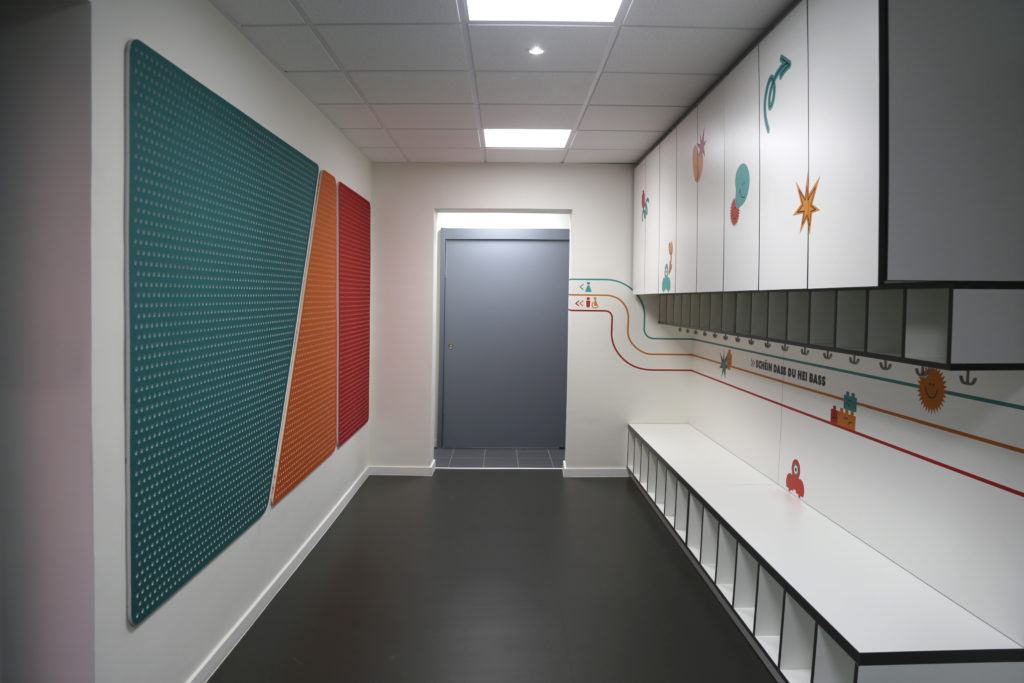
The Makerspace logo, broken down into three blocks, recalls the buildable, modular nature of the projects that can be made here. The identity is built on three primary and secondary colors. These tones are used in dynamic trapezoidal shapes that structure the visual materials.
The “pixel art” approach and the use of colored rods customize the furniture and reinforce the idea of modularity and endless creativity, in keeping with the space.
Creativity is intelligence having fun. — Albert Einstein
Following in the footsteps of science’s greats
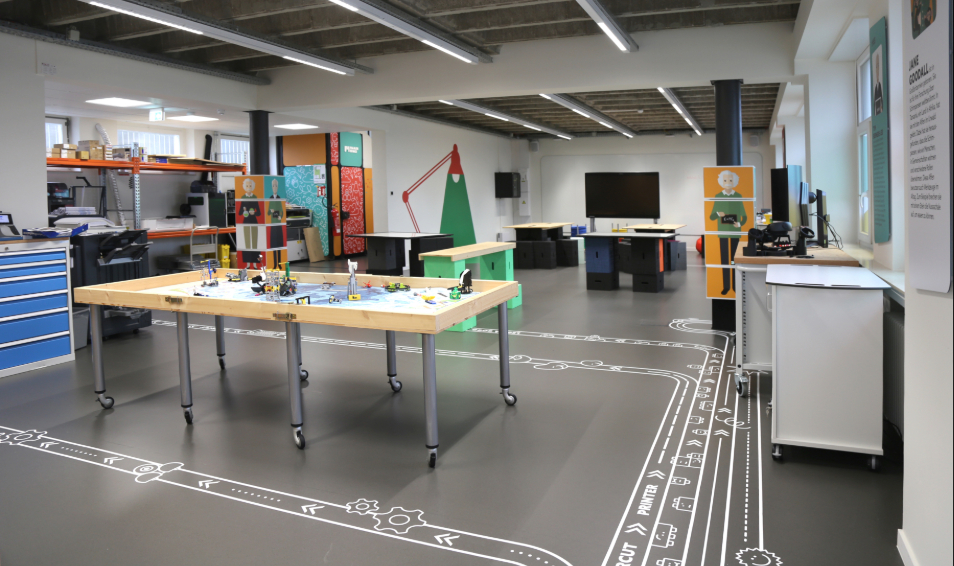
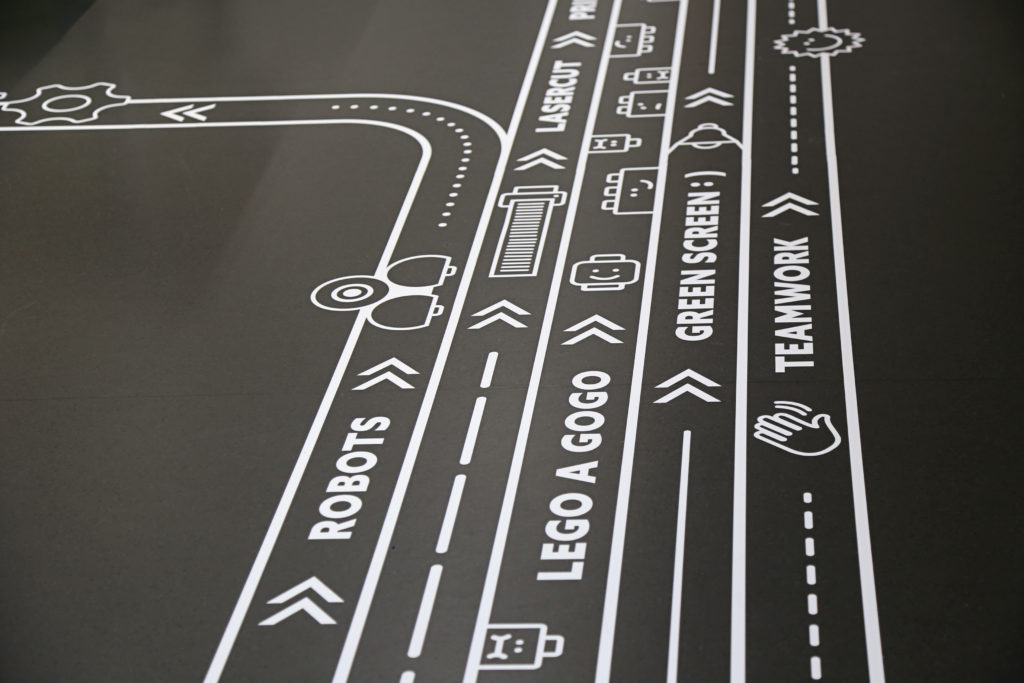
Playful signage and interior layout complete this visual coherence. From the outside, the window graphics covering the glass reproduce the geometric shapes of the brand guidelines, asserting the identity of the place. Inside, floor markings guide pupils to the various activity zones (Lego, Robots or Laser cutter), making it easier for them to move around.
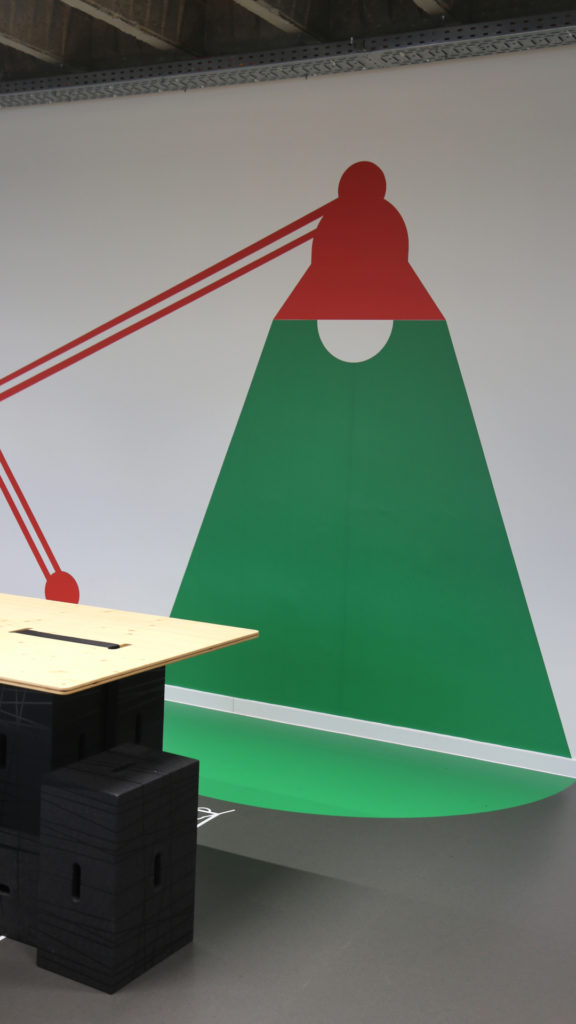
Educational panels and illustrated cubes pay tribute to great scientists such as Marie Curie and Einstein, bringing an inspiring dimension to the space. Interactive elements, such as a magnetic calendar and a programmable LED strip, encourage pupils’ involvement and curiosity, while a green screen wall designed for audiovisual projects adds a complementary, creative touch to the educational whole.
Curiosity is the secret of great creatives. — Leo Burnett
Navigating innovation
The A5 brochure was designed as a practical guide, a true extension of the space’s visual universe. Its shapes and color palette structure the information fluidly to make technology accessible to pupils and teachers. It covers the essentials: an introduction to the space, robotics or programming activities, and a catalog of equipment.
Turning technology into a playground
The graphic identity does more than decorate the space: it becomes a learning tool in itself, where every trapezoidal shape and every color “pixel” invites handling and building. By turning a technical space into a playful, coherent universe, graphic design makes the Makerspace a true catalyst for imagination, where technology becomes, for every child, a playground for innovation.
The best way to have good ideas is to have lots of ideas. — Linus Pauling