Updated in 2026
On Saturday, December 3, 2022, the SMS turned 30! So let’s discover its history and, above all, how it went from a technological revolution to an almost “has been” tool?
The birth of SMS
Matti Makkonen was a Finnish engineer who developed wireless communication systems for the company Telia Soneira.

In 1984, he had the idea of developing GSM technology (Global System for Mobile Communication, a digital standard for mobile telephony), and on this occasion the concept of SMS. With the aim of helping hard-of-hearing people communicate, he devoted himself to this development until 1988.
The emergence of the GSM standard had given the Scandinavian countries the idea of opening SMS to the general public. But at the time, operators did not believe in it and still thought that this type of message would never dethrone voice calls! Until then, the telephone was made for talking!
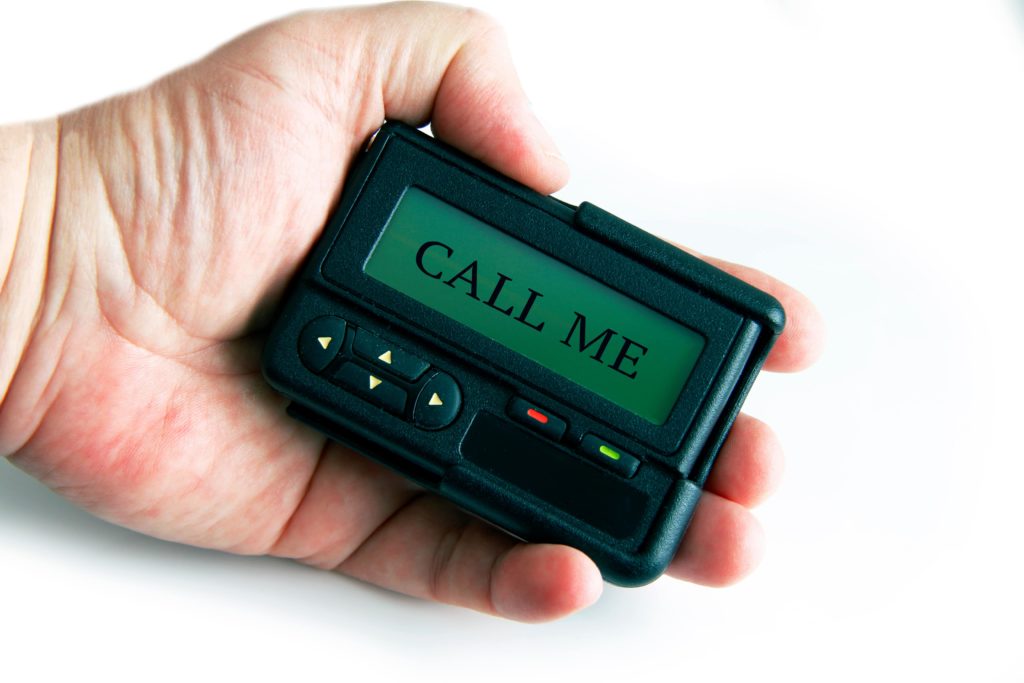
To exchange messages, there were only pagers such as the Tatoo or the Tam Tam, which received by radio waves numbers, voice messages or texts of up to 80 characters.
The very first SMS was sent on December 3, 1992.
It was Neil Papworth, an employee of Sema Group, who, from his computer, sent “Merry Christmas!” to the head of Vodafone, Richard Jarvis.
The latter, who was at a company party, received the SMS a few minutes later on his Orbitel 901, one of the first GSMs, weighing more than two kilos. It was a success for the company, which wanted to set up an internal communication system for its employees.
At that time SMS was not intended for the general public: it was to allow operators to inform their subscribers.
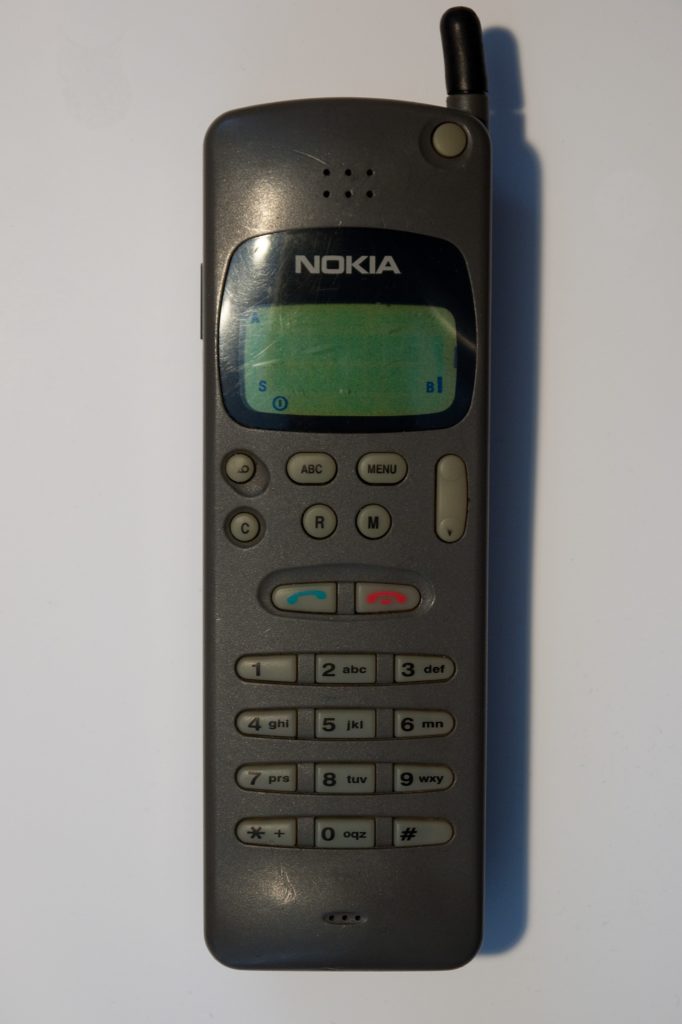
The real launch of the service took place in 1994 with the release of Nokia’s first consumer phone with a keypad, which made it possible to write messages: the Nokia 2010.
In 2000, Matti Makkonen joined Nokia Networks Professional, of which he became director.
SMS: a revolution
Technological revolution
In France, the first commercial SMS offers from operators finally appeared in 1997.
In November 1999, interoperability between the different operators’ networks took place, which completely changed the game.
Charged per unit, an SMS cost 1 franc, i.e. between 10 and 20 euro cents, with a limit of 160 characters.
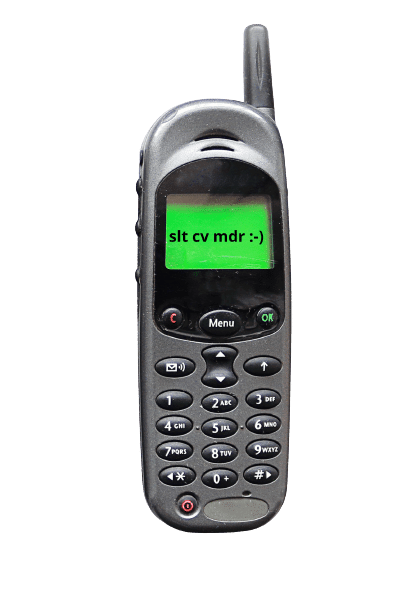
Messages therefore had to be short and condensed, getting straight to the point. This is how abbreviated writing was born, such as “mdr” (mort de rire, “dying of laughter”) or “lol” (Laughing Out Loud), as well as emoticons formed with punctuation marks.
During this period, the cost of an SMS was nevertheless more advantageous than the price of a phone call. This was the start of SMS mania!
In 2001, the first 3G network was launched in Japan, then quickly across the rest of the world.
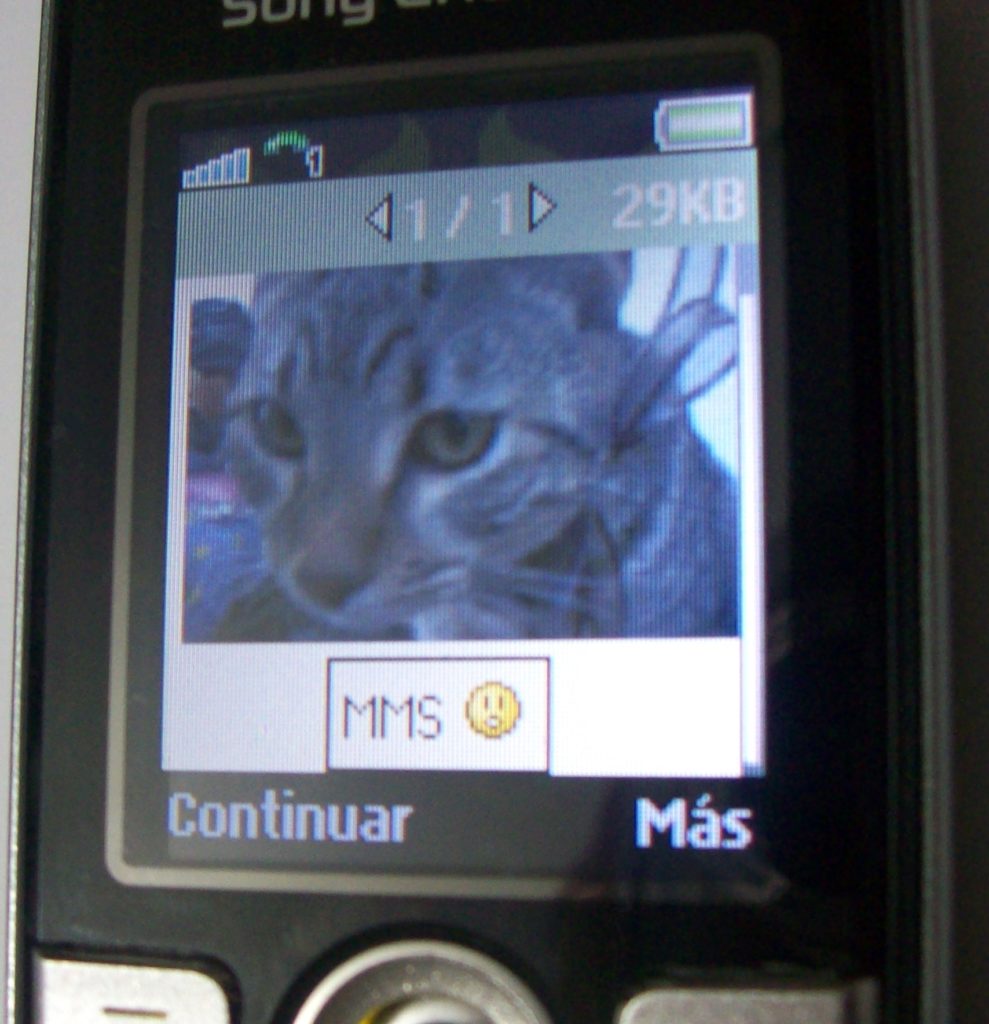
Then came the arrival of the Multimedia Messaging Service, MMS, in 2002. This was a new evolution of SMS towards the exchange of multimedia messages: photos, videos and audio recordings.
Texts were sent en masse, whether to arrange a meeting, to say goodnight, to remember the bread, or the traditional “Happy New Year”. So much so that in the 2000s, New Year’s Eve was generally marked by saturated mobile networks, because hundreds of millions of New Year’s SMS were sent.
There followed a period, from 2006 to 2015, when SMS was used more and more.
Between 2009 and 2013, the number of SMS sent in France increased by more than 130 billion. In 2015, the 200 billion SMS mark was even passed.
Social revolution
« When it appeared, SMS offered another mode of communication, much shorter, more condensed, faster and more discreet. »
« Sociologically, SMS changed the relationship with others. There is not the same degree of involvement; we are not obliged to observe the formalities, to be protocol-bound; we can be more telegraphic, more expeditious. »
According to Alexandre Eyries, senior lecturer and research supervisor in information and communication sciences at the University of Lorraine, interviewed by the website 20 Minutes.
Commercial revolution
SMS also marked a commercial revolution. It became a new communication tool for companies, which did not hesitate to use it for their advertising. In e-commerce, SMS are also used by banks as identification tools for buyers, to prevent fraud through two-factor authentication. This is also when appointment confirmations by SMS and delivery tracking were born.
The decline of SMS
After the dramatic increases in the number of SMS sent per year in France since the 2000s, this figure has been falling since 2015.
It fell from 202.554 billion in 2015 to 171.406 billion in 2018.
The cause? The arrival of instant messaging and social networks such as WhatsApp or Facebook Messenger, which became the favourite platforms of texters.
Instant messaging
Between 2007 and 2008, the first Android by HTC Dream and the first iPhone by Apple came out. As Android and Apple applications were very rare, it was the perfect opportunity for Brian Acton and Jan Koum, two former Yahoo employees, to create an instant messaging application. A real alternative to SMS, WhatsApp allowed people to communicate without barriers anywhere in the world.
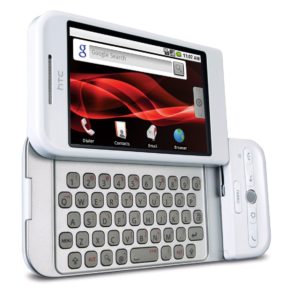
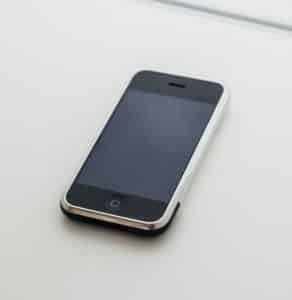
In 2009, they launched the WhatsApp application, an acronym for “What’s Up” and App, on the iPhone.
WhatsApp did not immediately take off in the market for iOS applications, which was not yet well established.
Koum then had the idea of letting users see whether the other person was online or not, status updates and the popular double tick. Following this, the application reached 250,000 users. The creators then approached various investors and extended their servers.
In 2011, WhatsApp was in the top 20 and reached 400 million users in 2013.
FACEBOOK MESSENGER
In August 2011, Lucy Zhang, co-founder of Beluga, announced the creation of Messenger: a “new mobile application that simplifies the way messaging works” on Android and iOS.
In April 2014, Messenger became a stand-alone application. From then on, to keep using the service, Facebook required its users to download a dedicated messaging app. From 2015 until 2019, the app became independent of Facebook, usable by everyone, even those without a Facebook account, simply with a phone number.
In April 2016, Messenger developed its commercial potential: advertising, bots and integrated payment arrived on Messenger.
That same year, Messenger passed one billion users, another success for the Facebook ecosystem, which continues to grow.
After many updates and developments, in December 2019, Messenger became the second most downloaded application of the decade worldwide between 2010 and 2019.
Social networks
In 2000, Hot or Not (AmIHotorNot.com) was born, a site where internet users were invited to post photos of themselves to be rated by other users on their attractiveness.
In 2003, Mark Zuckerberg created Facemash, to compete with the Hot or Not network.
In 2004, “The Facebook” succeeded it. That same year, the site reached one million users. In 2005, it dropped the “the” to become “Facebook”, and “Facebook.com” was bought for $200,000.
At the same time, many other social media sites arrived:
- LinkedIn, targeting the business community.
- Photo-sharing sites such as Photobucket and Flickr
- The social website del.icio.us, focused on sharing bookmarks
- The now ubiquitous blog and website creation platform WordPress.
- YouTube, launched in 2005 with the very first YouTube video, in which a man comments on his visit to the zoo in front of the elephant enclosure: “Me at the zoo”.
In 2006, Facebook went from a club reserved for Harvard students to a global network, and its success began.
Twttr, which later became Twitter, also took off in 2006.
In 2010, it was Instagram’s turn to make its entrance.
A year later, Snapchat was launched and was an immediate success.
In 2012, Facebook celebrated its billionth user.
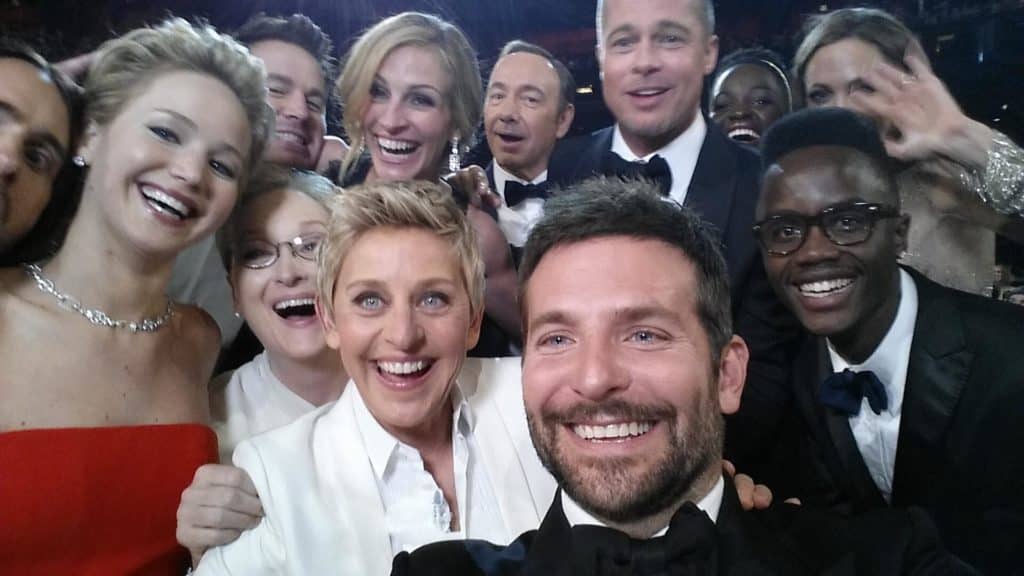
2014 was named “the year of the selfie” following the selfie taken by Ellen DeGeneres at the Oscars ceremony. It was retweeted more than three million times, a new record on Twitter, winning the Twitter “Golden Tweet” of the year award.
In 2015, the streaming war began with the appearance of Meerkat and Periscope.
There followed a rapid evolution of social networks with the creation of stories, lives and many features that again influenced the ways we communicate.
A period during which the exchange of SMS began to decline.
The use of SMS today
Not only is SMS much less used, but its content has now changed completely. Although at the time they resembled personal diaries, today SMS have taken on the form of non-verbal exchanges.
These are low-value exchanges, poor content, rarely engaging, often sent for a practical purpose, such as “Ok” or “See you later”.
The evolution of social networks has only accentuated this trend. “We detail our lives on Instagram…
« Maintenant, on envoie des SMS dans notre milieu professionnel, ça facilite la communication, c’est plus rapide et on est sûr qu’il soit lu, contrairement à l’e-mail »
Selon Alexandre Eyries
In 2021, a decline of 15% was observed by the Arcep, compared with 13% in 2020. A decline in SMS “partly affected by the health crisis,” according to the Arcep.
SMS nevertheless continues to serve as a communication tool for more and more companies. It is now an integral part of the main mobile marketing solutions.
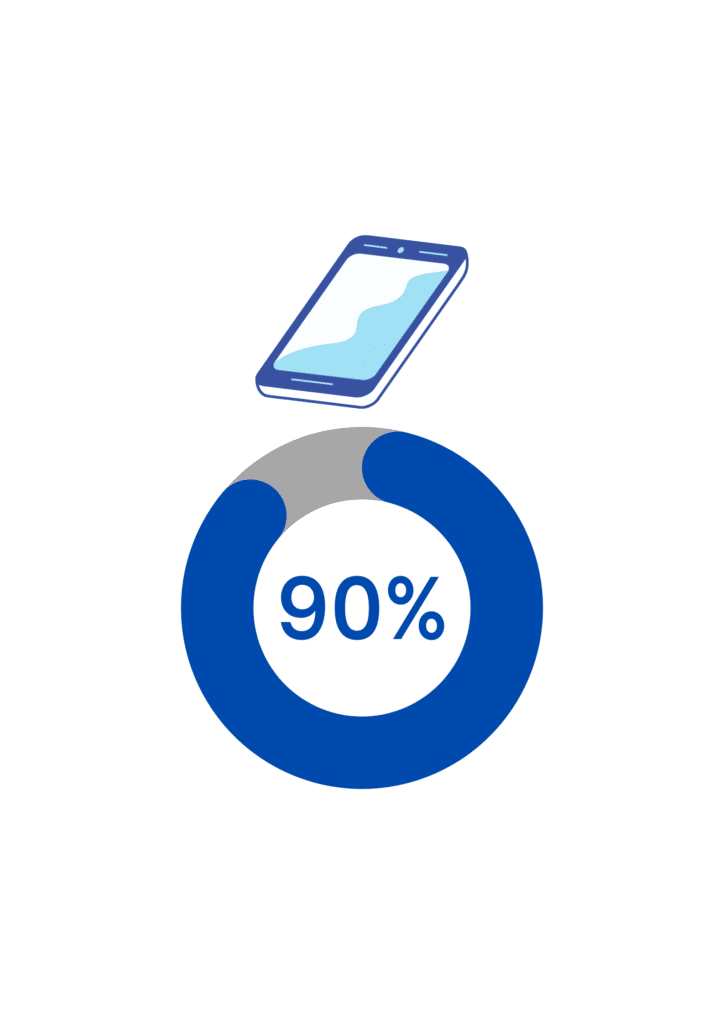
Nine out of ten consumers prefer to communicate with businesses by SMS, whether through alerts, reminders, back-and-forth exchanges, and so on (SMS comparison, 2021).
According to analysis and market share data for 2021/2022 from financesonline.com.
In Luxembourg, the government for its part plans to use SMS as a tool for preventing and informing the population in the event of an emergency.
SMS therefore has a very different future now.
In 2026, although SMS has celebrated its 33 years, it is far from obsolete. In Luxembourg, it has become the channel of absolute reliability. While social messaging platforms are saturated, SMS has established itself as the bedrock of digital trust. It is now the pivot of the national LU-Alert system, guaranteeing instant communication with 100% of the population (residents and cross-border workers) without depending on an internet connection.
With an open rate still close to 98%, it has become a premium and secure relationship-marketing tool. Today, SMS is finding a new purpose and seems set to establish itself as a way to deliver critical information or an ultra-personalized customer experience.
Want to put these levers at the service of your communication? h2a, communication agency in Luxembourg, supports you from strategy to creation.
Discover our 2025 showreel