
Generative Engine Optimization (GEO) covers the practices that make content citable by generative AI such as Google AI Overviews, ChatGPT, Perplexity or Gemini. While traditional SEO aims for a click from Google results, GEO aims for a citation in the AI’s answer.
The term has spread with the rise of generative engines, but it remains unclear to many people. Here are the essentials, based on Google’s official documentation and on the 2026 data we use ourselves at the agency.
Where does GEO come from?
The key point: GEO comes from academic research, not from a standard published by Google, OpenAI or Perplexity. It was published in 2023 by researchers at Princeton under the title “GEO: Generative Engine Optimization”. They present a benchmark, the GEO-bench, to measure the impact of different techniques on how visible content is in AI answers. You can read their research paper online. According to this study, targeted interventions can increase this visibility by up to 40%, but there is no miracle recipe, only good practices to adopt.
What Google recommends
Google highlights the fundamentals of quality SEO: unique content that carries a point of view or a fact, a people-first approach, genuine multimedia content, a clear structure (headings, paragraphs), semantic HTML and good technical accessibility. Structured data remains recommended but not mandatory. Google, however, advises against “tricks” such as llms.txt files or artificially splitting content into micro-blocks: their effect has not been proven.
In short, GEO is not a new discipline replacing SEO, but SEO applied to a new channel: an AI’s answer rather than a results page.
Why is GEO becoming unavoidable in 2026?
- 68.01% of Google searches in the United States ended without a click in early 2026, compared with 60.45% in 2024.
- AI Overviews reach roughly 2 billion monthly users.
- ChatGPT has around 800 million weekly users, and is increasingly used as a search engine.
- Gartner expects a 25% drop in traditional search volume by 2026.
Four reasons to keep a cool head about ChatGPT Ads
- No ads for business accounts: ads only reach free users. You may be completely missing subscribers, who use the tool more regularly.
- The European block: in Europe, the law protects privacy. ChatGPT is not allowed to use chat history to target its ads, which makes them far less precise than in the United States.
- In the advertising world, ChatGPT is still small. Its revenue is minimal compared with the billions generated by Google or Facebook.
- AI now means more than ChatGPT: many internet users use other artificial intelligences too. If you only advertise on ChatGPT, you miss a large part of the audience.
How does an AI engine choose its sources?
- The AI receives a question.
- It retrieves the most relevant passages from its index, but only targeted excerpts.
- It generates an answer from these excerpts and cites the source.
This means each section of your content must make sense on its own, without depending on the previous paragraph.
Example: a real estate agency in Luxembourg
Imagine someone asks an AI today: “Which agency do you recommend for buying in Strassen?” rather than searching on Google. To be cited, the agency needs a dedicated page on Strassen with concrete data (price per square meter, time to sell…) and genuine customer reviews, not generic text about “real estate in Luxembourg”.
How to measure your GEO visibility
There is no tracking tool as mature as those for SEO yet.
In practice:
- List the questions your customers actually ask.
- Ask them in ChatGPT, Perplexity and Google AI Overviews.
- Note whether you are cited, and compare with your competitors.
FAQ
How can you get cited by ChatGPT or Google AI Overviews?
There is no guaranteed formula. What helps: unique content providing distinct facts or perspectives, a clear structure with headings, concrete local information, and a technically accessible website.
What is GEO?
GEO (Generative Engine Optimization) brings together the practices that make content citable by generative AI tools such as ChatGPT, Perplexity or Google’s AI Overviews. Where SEO aims for a click from Google, GEO aims for a citation in the AI’s answer. The term comes from a study by researchers at Princeton published in 2023.
Can GA4 show traffic coming from ChatGPT?
Yes. Since May 2026, GA4 groups visits sent by AI assistants such as ChatGPT, Gemini or Claude in a channel called “AI Assistant”.
Is your company eligible for the SME Package?
To benefit from this support, your company simply needs to meet these 4 criteria:
- Have its registered office established in Luxembourg.
- Hold a valid establishment authorization.
- Employ fewer than 250 people.
- Achieve an annual turnover of less than 50 million euros.
Our latest projects
-
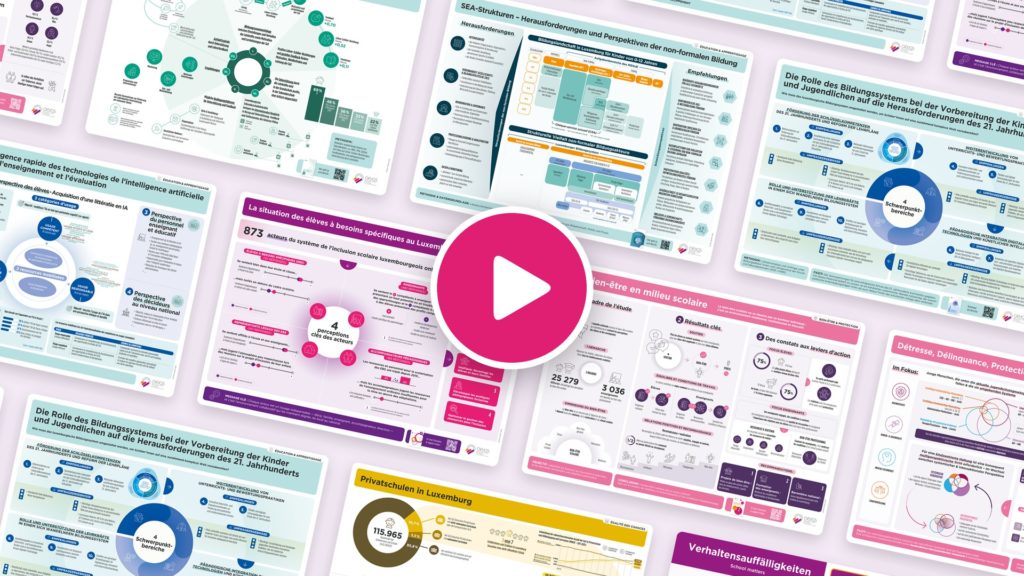
Data visualisation: when infographics give meaning to data
Inside the project for Luxembourg’s national observatory for children, youth and school quality For the Observatory Day 360° on 27 November 2026, we supported the OEJQS in bringing… -

Beyond the portfolio: the human stories behind the Vauban space
After the primary canteen, the teachers’ cafeteria and the Mandela space, it is now the turn of secondary students to have a place that feels like theirs. The… -

Filip Tapella: the ascent continues
You may remember Filip, the young medical student who climbs the highest peaks alongside his studies. Earlier this year, he took on a major challenge: a double expedition…
Agency life
-

October dump
On the menu this month: photo shoots, filming, Mont d'Or (lots of it) and birthdays to celebrate. Come and see what happened at the agency in October! -

h2a.lu receives an honorable mention at the Awwwards
Our new h2a.lu website has received an honorable mention (Honorable Mention) from the Awwwards, the international platform that recognises the best websites for their design, usability, creativity and… -

September dump
In September, we saw life through rose-tinted glasses, or rather grenadine-tinted ones. After months of co-creation at the agency, we are happy to present our new identity. Here’s…
In-depth analysis
-

Why entrust your data to data visualisation experts
Figures, tables, percentages, survey results… Organisations produce and publish more and more data. But you still have to know how to make it understandable. That is the whole… -

PHP2Shell flaw: thousands of websites potentially exposed in Luxembourg
On 21 October, two critical flaws were revealed in PHP, the language that powers nearly 70% of identifiable websites. WordPress, Drupal, WooCommerce: few sites are immune, in Luxembourg… -

Signage and space design in your company
What are the goals of space design and signage? From wayfinding to brand image, discover how to optimise the layout of your premises.