
Would you like to unlock the secrets of social media communication? To know what type of content to post, where and when?
Our new series of articles is for you!
A few weeks ago, we discussed social media campaigns.
We will now show you how to optimize your pages through content: this is SMO, Social Media Optimization.
Let us start this series with LinkedIn, the best-known professional social network in the world.
1. An overview of LinkedIn
LinkedIn was created in… 2002! Yes, time flies. Since its creation, the social network has changed a great deal, and today it is a reference for all professionals.
One professional in three around the world has a LinkedIn account. It is a “must-have” for anyone working in a professional environment, and above all for companies.
The company page
How can you make sure your company is visible on LinkedIn?
By creating a “company page”
The confusion between personal profile and company page still sometimes exists.
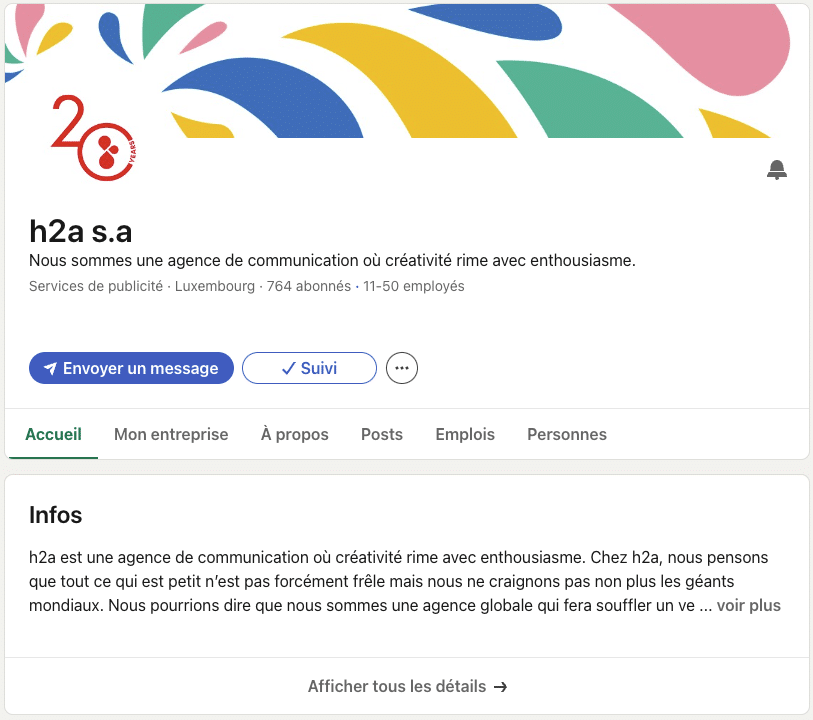
The company page lets you:
- publish content in your company’s name
- add your logo
- present your company
- add your contact details: address, map, telephone, etc.
- post your job vacancies
- publish your offers and your products
Adding as much information as possible to your page gives you a better chance of being contacted.
Why be present on LinkedIn?
Is it really an obligation? Why should we comply?
Quite simply because LinkedIn has, over time, become a reference: today it is the leading professional directory.
“The place to be“
Almost all companies display the little LinkedIn logo on their brochures or websites. It is expected, and it is almost more than that: a company that is not present on LinkedIn does not inspire confidence.
That is the whole point: today LinkedIn provides a certain level of trust for internet users:
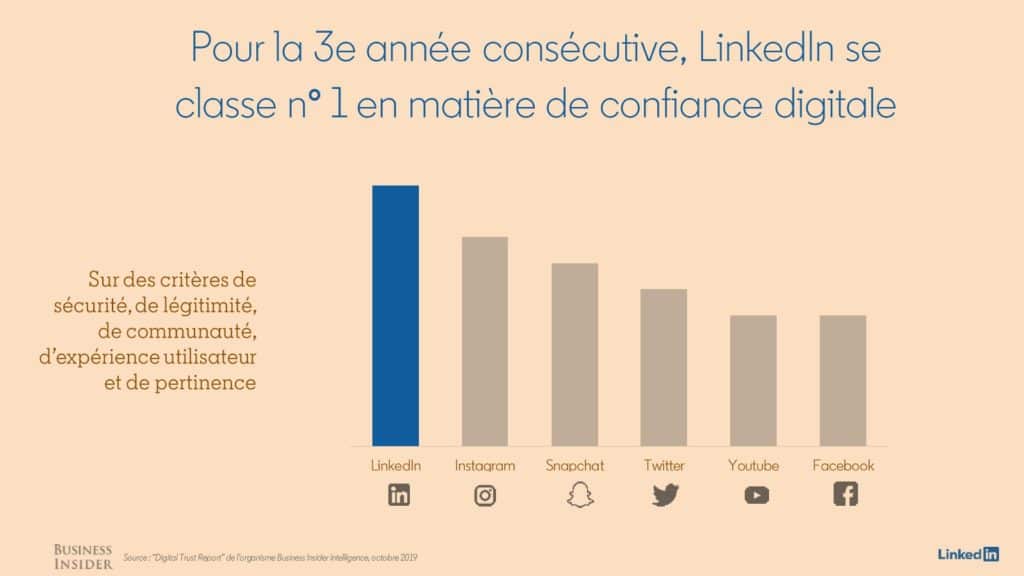
Using your network is a matter of trust, and today that network is also being built on LinkedIn. This is also where a company’s “reliability” is measured: receiving good reviews and good comments, and showing that you are present and that you respond to these comments, is now essential.
LinkedIn: your showcase
Many salespeople now use it to research their prospects, or even contact them directly through the network. LinkedIn has become a communication tool that is part of professional life.
Recruitment: attracting talent
Originally, and still today, the network was mainly used to showcase a professional profile, for people looking for work or new opportunities. This aspect of the network has not changed, and LinkedIn offers the possibility for companies to post their job vacancies.
But the trend today is that it is companies that have to look for talent, or rather attract it: the company must seduce its future recruits. This is also why the network matters, since it allows the image of your company to be highlighted, whether for future clients or future employees.
2. The audience
Who?
LinkedIn members are very active, they move quickly and do not waste time, so the content published gets straight to the point; there is very little “relaxing” content there, unlike on Facebook for example.
As many users use it for commercial and professional purposes, the content remains very “professional”: job offers, training courses, sales offers aimed at B2B.
Depending on the professional field concerned, many users look for or publish advice and useful information.
How?
As on most social networks, to be seen and above all noticed, it is necessary to establish a publishing rhythm, and being regular with posts gets users used to reading your content.
Community managers and communication specialists create publishing calendars, defining for each social network which article and which image to publish.
Without going so far as to create a true dashboard, setting one day of the week to publish a news item is a good technique.
Communicate, yes, but about what? Simply describing your activities is not necessarily of interest to the people who follow you: they already know your company and have chosen to follow you.
It should be kept in mind that each social network may be associated with an angle or a theme. As we said above, LinkedIn’s audience is not the same as that of Facebook or Twitter.
An example to illustrate this point, with the community management of Décathlon:
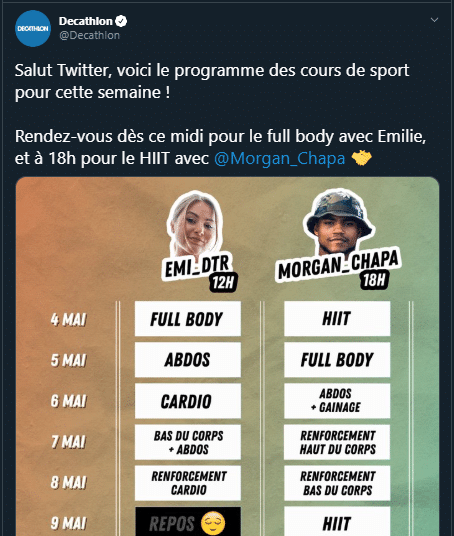
On Twitter, Décathlon is very active, often with a humorous tone, and the sense of community is very strong there. The community manager uses the informal “tu” with internet users and does not hesitate to talk to them directly or to make puns.
During the lockdown, Décathlon used Twitter to communicate about its remote sports classes: every day a timetable was published, along with encouragement and challenges for the community of followers.
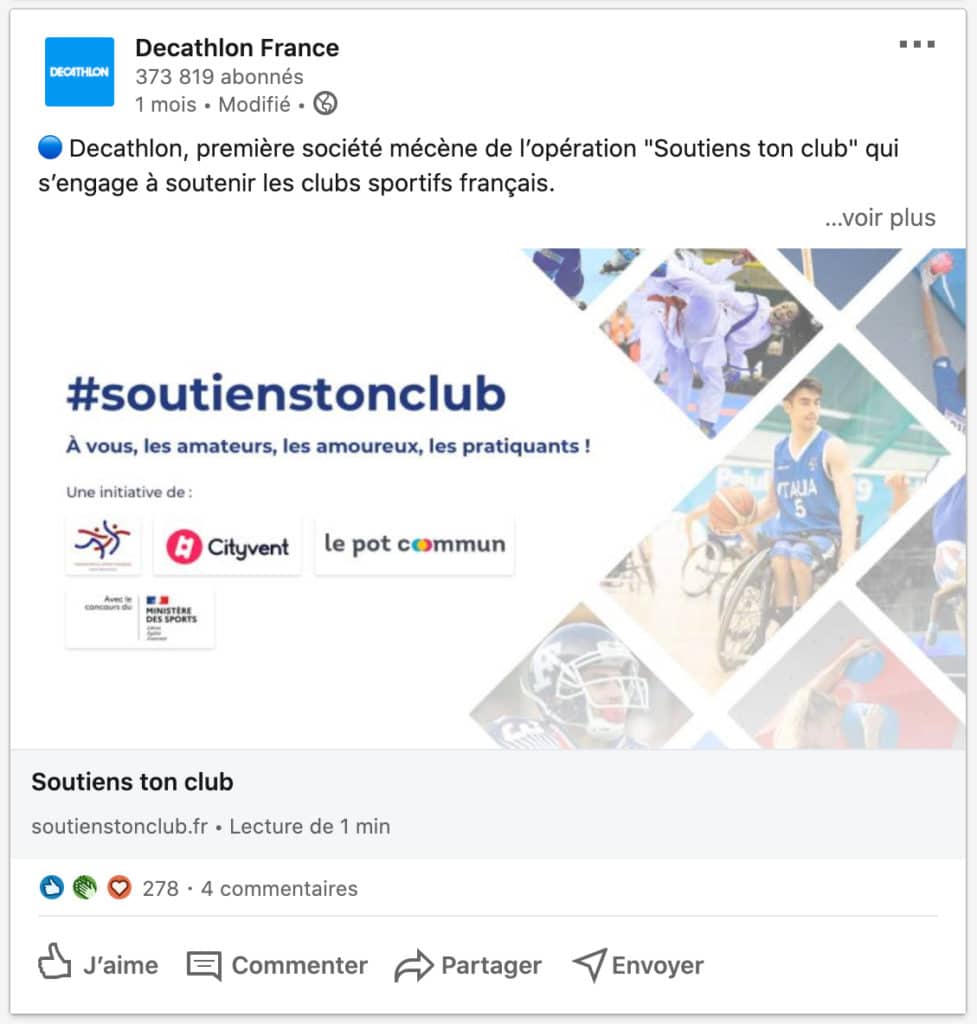
On LinkedIn the tone is different: it talks about the brand, its new products, its participation in initiatives or even its recruitment campaigns.
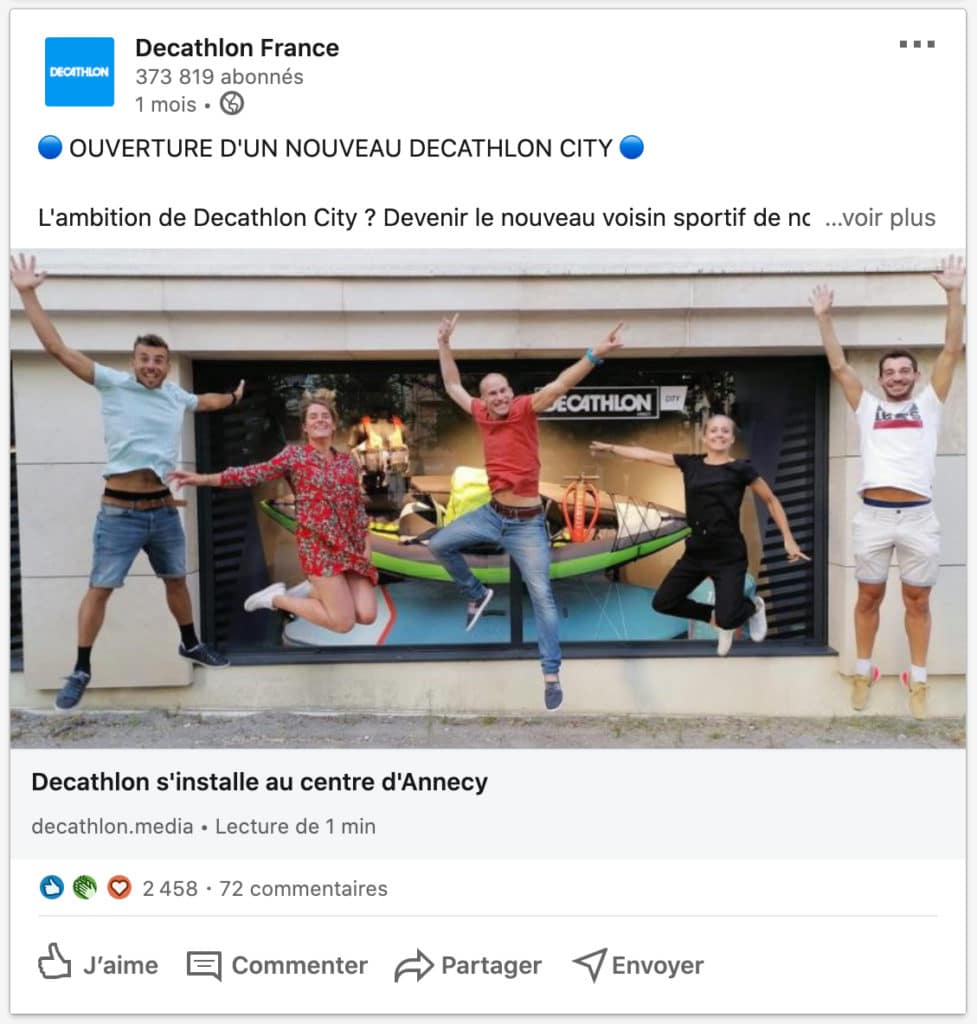
Once your news or publications are online, a statistics section is available on LinkedIn that lets you track the performance of your page and your publications. You can thus measure which posts performed best, view your comments in detail, or see the number of visitors to your page.
3. Details on the algorithm
LinkedIn’s algorithm has its own characteristics.
It is simple and direct:
- It likes beautiful photos: a post without a photo will not be favoured by the network, or much less so
- It likes engagement: a published post that gathers few or no reactions within the hour after its publication will very quickly be forgotten
- It likes rhythm: if your publications are too scattered over time, and not regular, the algorithm penalizes you as well.
- As on Twitter, hashtags are appreciated on LinkedIn.
Once each of these steps has been taken, the world opens up to you and your post will be “shown” to a larger audience.
4. Content marketing applied to LinkedIn
What is content marketing?
Content marketing is a technique that aims to build a relationship of trust with your prospects. Unlike “aggressive” advertising, content marketing is a strategy that lasts over time and aims to advise and share information with your prospects.
Even without a blog, it is possible to share content on social networks.
The aim is to get people talking about you: to explain what you can do for your future clients, to describe your solutions and to show them how you can meet their needs.
The core of your content will often be the same whatever its destination, since it concerns your company and your products. You can therefore adapt it into several formats: a blog article, a newsletter, then social media posts, for example.
You can also, at the end of the year for example, condense your articles into a white paper to draw out the best ideas.
Writing for LinkedIn
As we mentioned earlier, the LinkedIn user is a “professional”, so they expect quality content. This is therefore an opportunity to publish serious and interesting content, with the aim of becoming a genuinely reliable source of information and a trusted brand for your potential clients.
It is still important to keep the human side and to put emotion into the content.
To attract readers’ attention, it is advisable to start by asking a question, or by describing a concrete case encountered in everyday life:
“How do you attract the attention of your clients?” for example
The aim is to set out the main issue of your content from the outset, to announce your subject clearly.
The content of your post must be engaging: include a striking image or video.
The ultimate goal is for the user to:
- click on the link in your content,
- find it interesting enough to share it with their contacts (as we saw earlier, an article that triggers no reaction will very quickly be forgotten by the algorithm),
- write a comment on your post,
- or better still, contact you!