Article published in 2023, updated on November 9, 2026.
“AI is coming”
In 2026, artificial intelligence drives a large part of Google Ads campaigns: it chooses bids, broadens targeted searches and even writes ad variants. What makes the difference is no longer manual adjustment, but the quality of what is passed on to the algorithm: ads, landing pages and conversion signals.
“AI is coming”, we said in 2023. It has arrived. It has transformed the job of the SEA expert, the specialist in sponsored ads on search engines, without making it disappear. Google Ads has not become a tool where you simply enter your domain name and your bank card to multiply your prospects: without strategy or reliable data, the algorithm optimizes in a vacuum.
In this article, we take stock of what has changed since 2023: the automation of Google Ads, the arrival of ads near AI-generated answers, advertising in ChatGPT, and what all this means for our work.
Google Ads increasingly steers itself
Google encourages advertisers to entrust more and more decisions to machine learning. The AI analyzes many signals in real time (device, location, time, search history) to estimate the probability that a click will become a conversion, that is, a purchase or a contact request.
Targeting: from fine selection to signals
Granular targeting is giving way to the algorithm. Similar audiences disappeared in August 2023, replaced by optimized targeting and automatic audience expansion. That same year, Universal Analytics was shut down in favour of Google Analytics 4, on which campaign tracking and optimization now rely.
To go further: What is Google Analytics 4?
Smart bidding and Performance Max
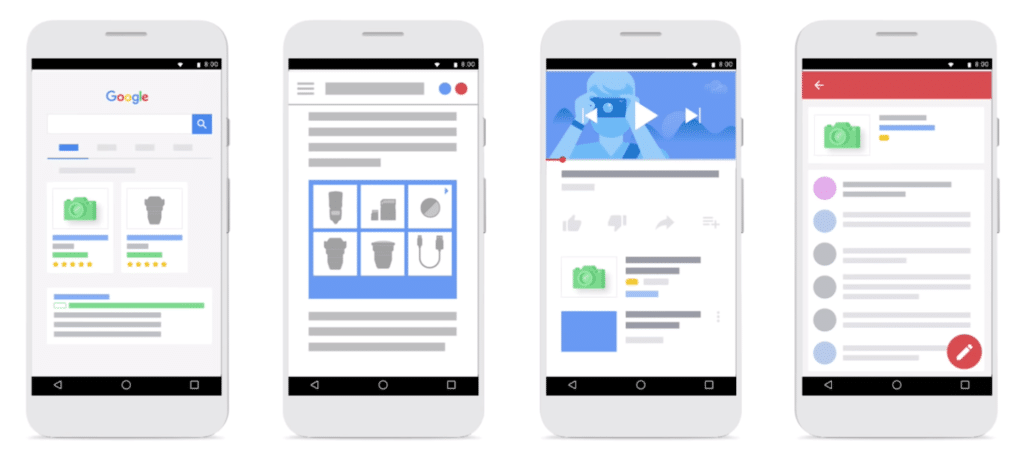
Smart bidding strategies adjust the price of each click according to the probability of conversion. Performance Max goes further: a single campaign broadcasts your ads across all of Google’s networks (Search, YouTube, Display, Gmail, Maps), and the AI distributes the budget wherever it finds conversions.
These campaigns nevertheless require real expertise: without reliable conversion signals or regular monitoring, they can spend the budget on poorly relevant audiences.
AI Max: search without keywords
The latest step is AI Max for Search, which is activated within an existing search campaign. According to Google, it extends delivery beyond the keywords chosen, generates ad text variants from your ads and your site, and can send the user to the page of the site deemed most relevant.
The advertiser keeps levers of control: exclusions of brands and URLs, targeted locations, and the option to switch off each feature. A new report also shows which searches, texts and pages AI Max has chosen.
Source: Google Ads Help.
We no longer optimize the settings, we optimize the inputs
What are inputs?
Inputs are all the information we provide to Google to set up and feed a campaign. The more the algorithm decides on its own, the more their quality counts.
The creatives
Texts, headlines and visuals are the first elements the user sees. They must be clear, highlight a concrete benefit and make people want to act. With the automatic generation of variants, they also serve as raw material for the AI: generic starting ads will produce generic variants.
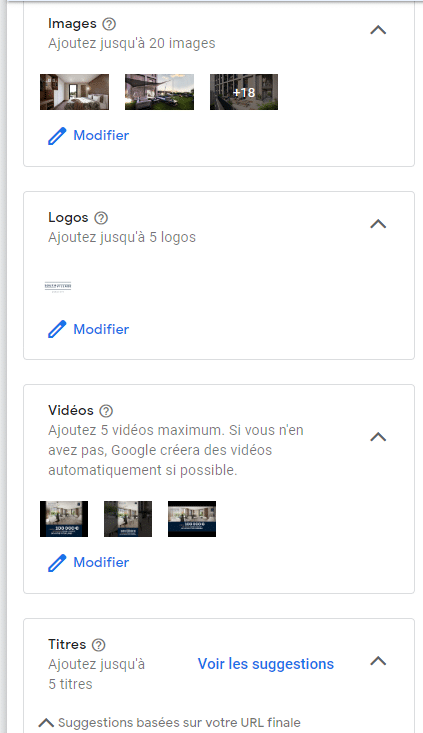
Landing pages
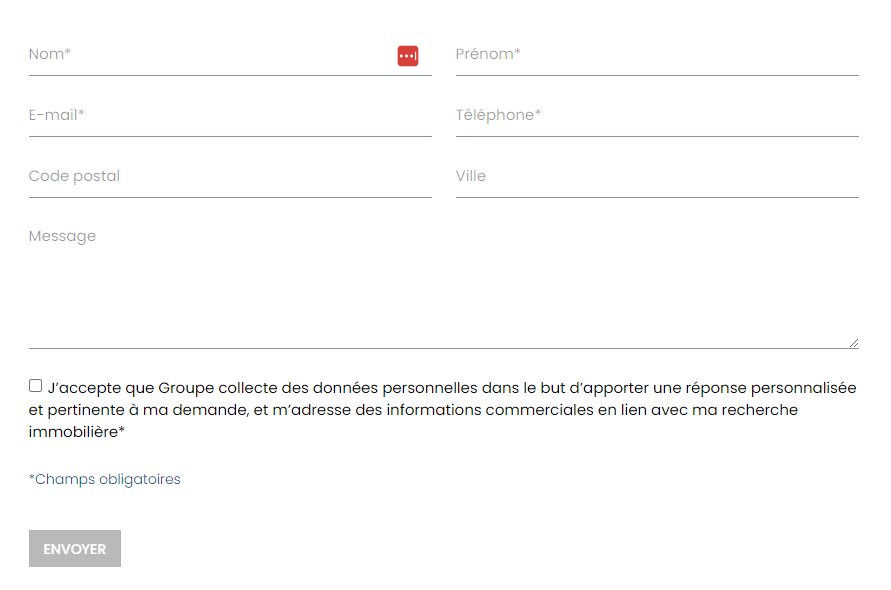
This is the page the visitor lands on after the click. It must deliver on the promise of the ad, be easy to read and encourage action: a purchase, a contact request, a sign-up. It counts even more in 2026, since Google reads its content to choose searches and write the texts of its automated campaigns.
For example, for our client Hépich, part of the Schroeder group, we created this contact form page as a landing page in order to convert users into prospects.
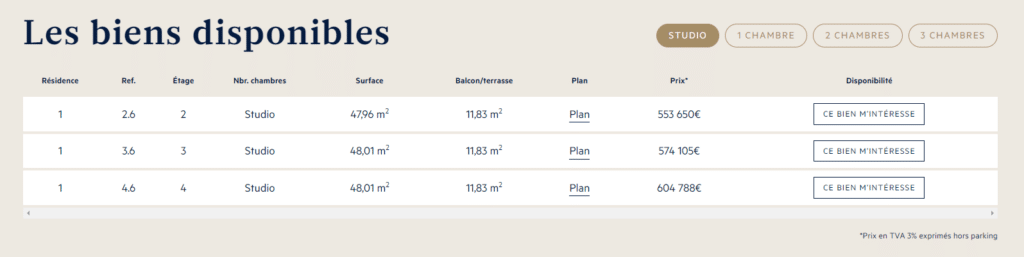
For our client Capelli and its South Village project, we used a page listing all the available properties, with calls to action such as “this property interests me”.
Product feeds
For Shopping and Performance Max campaigns, the product feed provides the name, description, price and availability of each item. A complete, up-to-date feed clearly improves performance.
Conversion signals
These are the actions you want to measure: purchases, contact requests, calls. In a campaign that optimizes itself, each conversion is an example the algorithm uses to find similar users. The more numerous and reliable the signals, the more precise the targeting: this has become the real targeting.
As an agency, our role is not limited to creating and launching campaigns. We work on each of these inputs: visual and written creatives, landing pages, conversion tracking and advice on how to present your products or services.
AI in search: advertising has found its place
Google now displays AI-generated summaries (AI Overviews) at the top of many results, and offers a conversational mode, AI Mode. Ads can appear above or below these summaries and, in some countries, directly within the answer.
In Luxembourg and in French, only display above or below AI Overviews is currently possible: integration within the answer is for now reserved to a list of countries, in English. Existing Search, Shopping and Performance Max campaigns are eligible, without a separate budget. However, these placements cannot be targeted or excluded, and their results are mixed in with the others in reports. Source: Google Ads Help.
Advertising arrives in ChatGPT
Since late August 2026, ChatGPT has been displaying ads in 31 European countries, for users of the free and Go plans. The ads appear below the answer, are labelled as sponsored and, according to OpenAI, do not influence what the AI answers.
We tell you more about advertising on ChatGPT right here:

Image risks have not disappeared
An AI can still produce errors presented as facts, known as hallucinations. An ad displayed next to a wrong answer or a negative question can harm a brand’s image. This is one more reason to closely monitor the searches that trigger your ads and to exclude those that do not match you.
Measuring traffic coming from AI
Internet users no longer go only through Google: they also ask ChatGPT, Gemini or Claude their questions, which sometimes cite websites. Since May 2026, Google Analytics 4 groups these visits into a dedicated channel, “AI Assistant”. You can finally see how many visitors arrive on your site thanks to AI answers, and compare their behaviour with that of advertising traffic.
Source: Google Analytics release notes.
How is our profession evolving?
AI, a tool to master
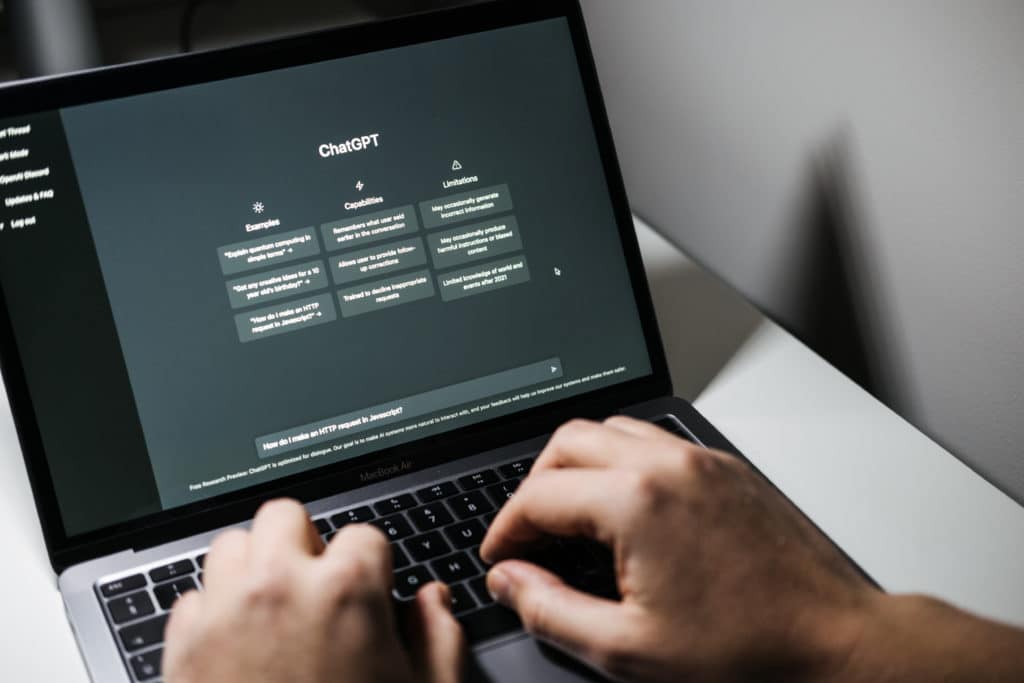
In 2023, we thought that knowing how to use AI would become a core skill. That is now part of everyday life: advertising platforms integrate AI everywhere, and tools such as ChatGPT are used to analyse, write and test faster. Many professions are reinventing themselves by delegating repetitive tasks in order to focus on those that bring real value.
“Garbage in, garbage out”
This saying sums it all up: if you feed in poor-quality data, you get poor-quality results. An AI does not intuitively understand the nuances of a brand or a market. It responds to the instructions and data it receives. To get the best out of it, you need to:
- understand how it works, in order to know its strengths, weaknesses and biases;
- have a clear strategic vision of what you want to achieve, so as to give it the right instructions;
- be competent enough to assess its proposals and correct them, because the best result rarely comes from the first attempt.
Our role

Our role remains to make products and services known, to know to whom to offer them and how. Algorithms collect and analyze considerable volumes of data, but experts are always needed to define the strategy, provide the right inputs and interpret the results. AI assists; it does not decide on behalf of the advertiser.
As a Google Partner agency in Luxembourg, we closely follow every development in Google Ads, AI engines and new advertising formats. We continuously adapt the way we work in order to offer our clients up-to-date strategies, and we share what we learn in our articles.
More broadly
As far as the future of communication is concerned, it is important to follow developments at Google and Microsoft. Google is known for being at the cutting edge of search technology and AI, and it is important to watch how it responds to the growing competition from Microsoft, which has taken hold of ChatGPT.