At h2a we use WordPress for most of our website creation projects, but we have noticed that many preconceived ideas circulate about this CMS.
That is why we decided to talk about it in this article.
First of all, let’s start with a quick refresher.
What is WordPress for?
It is a Content Management System (CMS). In other words, it is a tool that makes it possible to create your site and edit it easily, without writing the code from scratch.
Be careful: this does not mean that installing WordPress is enough to automatically design your site from A to Z, but rather that the structure is ready to be customized.
We use WordPress to create showcase sites, or sites on which clients will regularly publish content.
When a client’s project requires specific development, we use a different technology, such as Symfony, for example.
Here are some preconceived ideas about WordPress that we would like to clear up, and for which we will give you our interpretation.

WordPress is just for blogs, isn’t it?
Not only! With a bespoke design and theme, you can have a unique professional website.
Originally, at the very beginning of the 2000s, WordPress was used as a tool for creating a personal blog.
Since then, things have changed a great deal, and 39 major versions of WordPress have been released.
Today, 43% of the web is powered by WordPress, from personal blogs to the largest online news sites.
This evolution is entirely logical and stems from how we use the web every day: no longer as a tool reserved for specialists, but as a communication and work tool.
At the very beginning of the 2000s, having your own website was rare. Personal blogs then became widespread, but at that time few companies had a website, and those that did rarely updated it, and only occasionally with the help of a developer. Today things are different, and it is important for any company present on the web to be able to update its website content.
When we design a client’s website with WordPress, we make sure it is unique: we create a bespoke design that matches the client’s graphic universe.
Once the design is approved, we create a WordPress theme specific to our client’s identity.
The advantage is that the client has a tailor-made website while being autonomous in updating it whenever they wish, thanks to a very simple content system: WordPress.

WordPress is also for professionals? My cousin uses it for his association’s website.
Yes! WordPress lets you connect your business applications and plug-ins linked to software, such as a CRM for example.
Your cousin is quite right to use WordPress! As it is a very popular CMS, it is compatible with many applications and all kinds of technologies.
To date, no fewer than 55,000 plug-ins are compatible with WordPress. So there is a very good chance that a business application you use every day is compatible with WordPress.
This strong popularity also means you can get in touch with a very active community of developers and professionals, and therefore get a quick answer if you run into a problem with an application.
For our part, we use WordPress to develop the websites of our clients in the real estate sector.
We can connect their property management tools via API or through dedicated plug-ins. In other words, our real estate clients enter their properties into their business tool only once; the properties are then visible directly on their website. If they receive a request from a client via their website, it arrives directly in their management tool.

WordPress is not secure
False! WordPress is no more at risk than any other site exposed on the web; you simply need to update and maintain your site.
There have been, and still are, recurring hacks on WordPress sites. High popularity means widespread use, and therefore potentially “bad” uses too.
A WordPress site or WordPress plug-in that is not up to date is a potentially very attractive entry point for a hacker, and this very often happens.
It is therefore very important to maintain your site and to install updates regularly (while making backups).
More generally, whatever the technology, a website that does not run the latest versions of the languages used to develop it is just as much an entry point for a potential hack as a WordPress site.
I know nothing about IT
So it is made for you! A well-designed WordPress website is no more complicated to use than any business application.
Its major advantage is its ease of use: everyone can use it and easily manage their own website.
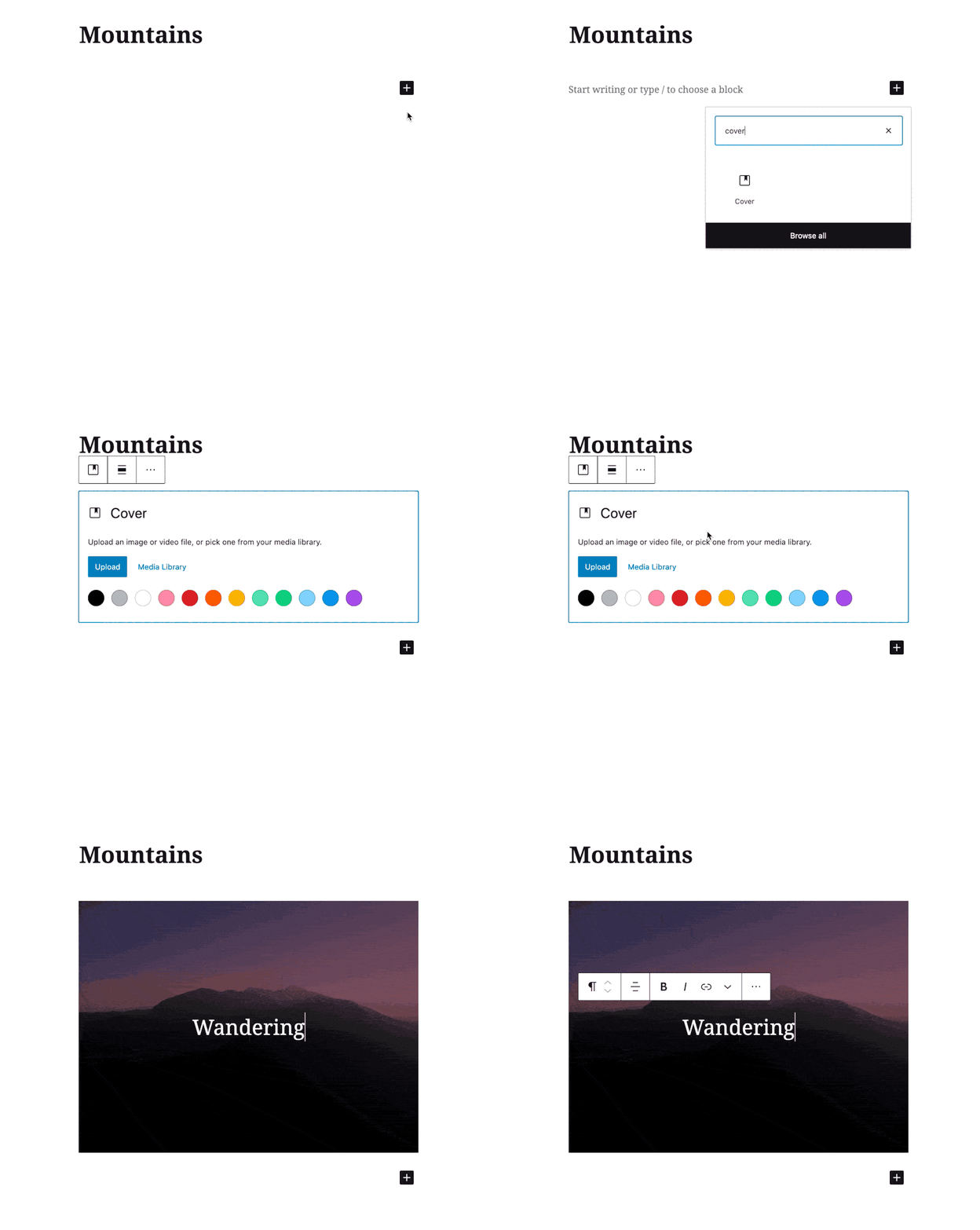
Visual content editors have also evolved a great deal over time, and the current editor, Gutenberg (yes, yes, like the inventor of printing) is revolutionizing the design of WordPress sites with a system of very simple blocks.
You can manage your web page almost like a text file in Word.
Honestly, that seems fairly simple, doesn’t it?
Of course, all of this is possible with the right theme.
As explained at the beginning of the article, at h2a we develop our own themes ourselves, so we make sure our clients can easily edit their content.