
[Mis à jour en 2025]
Let’s start at the beginning: what is a cookie? (A little chocolate chip biscuit! Yes, yes, thank you…)
A cookie is a small file containing data, created when an internet user visits a website.
Contrary to what one might think, cookies are all genuinely useful and are not only there to track you or push you to buy products. There are two types of cookies:
First-party cookies
First-party cookies are created by the creators of the site or by the company that manages the site.
For the purposes of our explanation, let’s take an example to make things easier.
Throughout this article, we will follow a cheesemonger who sells raclette platters online at mapetiteraclette.lu, for collection at his shop in Luxembourg City (obviously, what other example could we have chosen?).
To go back to the explanations: first-party cookies can be used to make your visit easier, for example by:
- Remembering that you have already logged in.
- Knowing which language of the site to display for you.
- Keeping your filters on a product list in memory.
- Keeping your shopping basket in memory.
Without these cookies, when ordering your cheese platter and putting it in your basket, you would not be able to calmly choose between cheese types without logging in again on every page visit!
First-party cookies can also serve to improve the user experience: tracking visitors’ journeys to determine which pages are most viewed, and checking which content interests visitors most, in order to rework the content and offer a smoother journey.

At the end of the month, the manager of mapetiteraclette.lu can check his statistics and see that the platter for six people is the most successful, so he can anticipate the following month and plan more stock.
Third-party cookies
These cookies also serve to study the visitor’s journey: which pages they look at and what their browsing habits are.
However, unlike first-party cookies, they are sent to an external provider, often an advertising platform such as Google or Facebook.

These third-party cookies are used for advertising purposes, to build audiences of visitors with similar profiles and purchasing habits.
Be careful: it is important to know who places these third-party cookies and who benefits from them.
The manager of mapetiteraclette.lu can place these cookies on his website in order to run Facebook campaigns. He will install a “Facebook pixel” on his site, which will allow him to create audiences from his website’s visitors.
These audiences will allow him to target a specific type of person, more likely to buy his raclette platters. He will be able to target cheese lovers, wine lovers or passionate skiers, for example (OK, it is very clichéd, but it is just an example).
Thanks to these third-party advertising cookies, the manager of our site will also be able to run remarketing campaigns: to follow you as you browse and send you banner ads.
We often hear that Facebook and Google track us in order to sell us better products.
It is therefore important to nuance this: indirectly, Google and Facebook benefit from online advertising, since the advertising budget is spent with them, but the direct users of these tracking cookies are the companies that run advertisements on Facebook and Google.
These companies can be large groups, but they can also be small businesses, whose business depends directly on online advertising, like the manager in our example.
Facebook’s advertising network obviously has “big” advertisers such as Netflix or McDonald’s, but it also has a very large number of “small” advertisers: the tourism and catering sectors, for example, are very active on Facebook, as is fashion.
During the Covid period, the big advertisers abandoned the Facebook platform, causing advertising prices to fall, and Facebook managed to maintain the figures of its advertising network by supporting small advertisers with free training and regular support from experts.
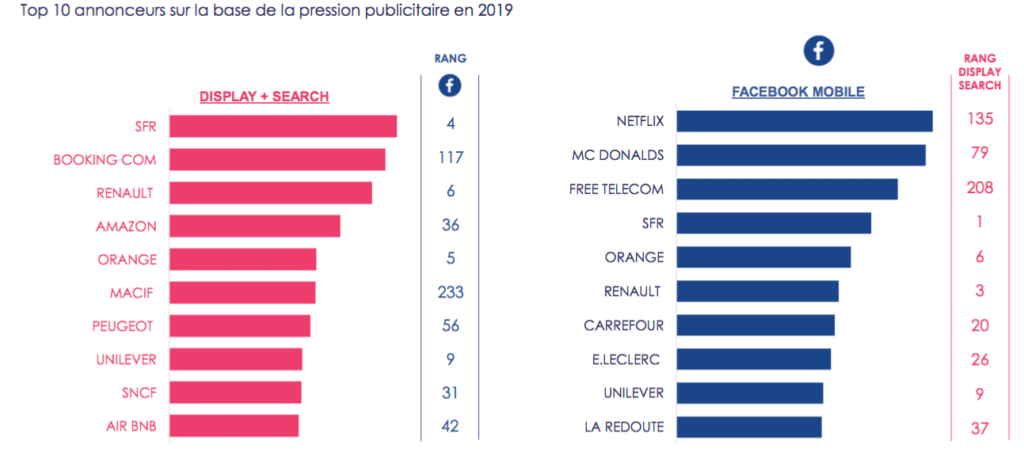
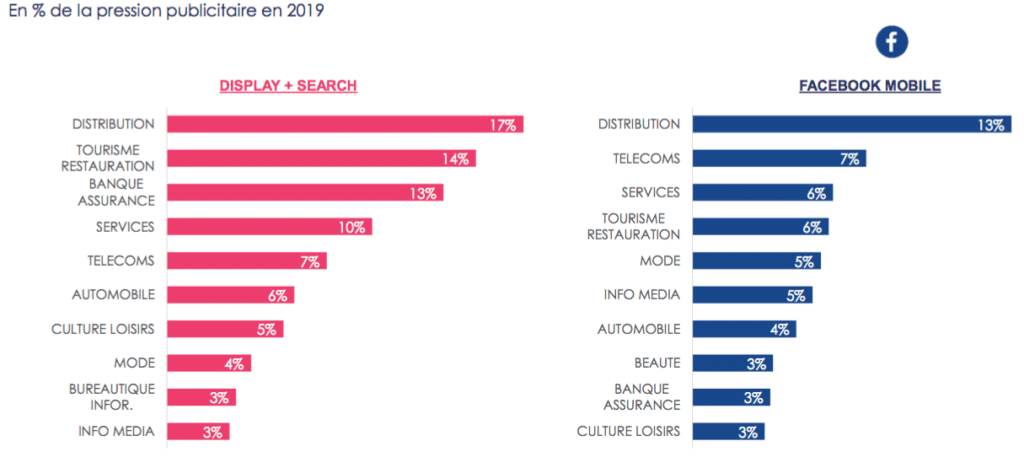
In the third quarter of 2020, Facebook announced that 10 million active advertisers were using the platform to promote their products and services worldwide.
Summary
- Cookies are small files containing data, used by website managers to make it easier to measure and analyze users’ behavior on a site.
- First-party cookies are used by site managers to allow their visitors to browse more smoothly and to keep their browsing data in memory.
- Third-party cookies are also placed by site managers, but they are passed on to external sites and then used for advertising purposes.
So why is everything stopping?
In 2018, you may know, a law came into force: the GDPR.

The aim of this law is to protect the privacy and personal data of users in the European Union. (This is of course a summary; you can learn more from the National Commission for Data Protection.)
In general, what is criticized about third-party cookies is that they now allow targeting in advertising to go very far, notably on the Google and Facebook platforms, because they have access to an incalculable amount of data about each of us.
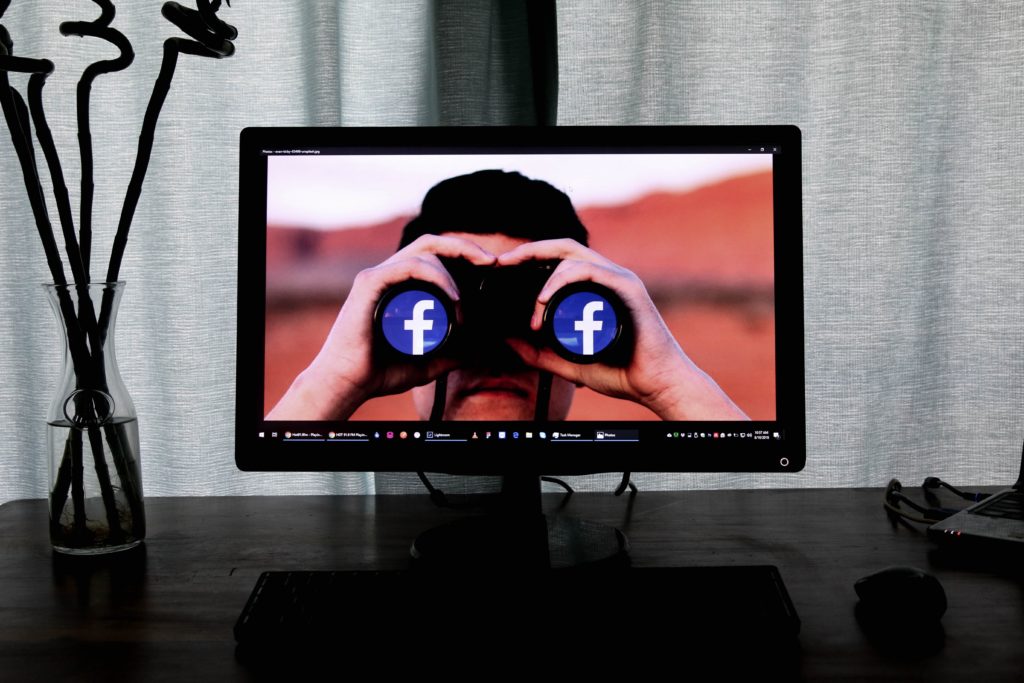
Moreover, most uninitiated people today do not know how their personal data is used on the web or in mobile apps. The aim of this law is also to inform the public and to ask whether or not the person visiting a site agrees to their personal data being used, and if so, how it is used.
The other criticism levelled at these web giants is that they transfer our data to the USA, which is no longer acceptable for the European Union (or only under conditions; to find out more, we suggest searching for “Privacy Shield”).
In practical terms, what does this mean?
Web browsers ban third-party cookies, or are gradually moving to ban them.
Apple, for example, does the same on iPhones: you may have seen the little pop-up asking whether you agree to be tracked when you open an app for the first time.
The aim is to protect internet users and to comply with European legislation.
But this will not only concern Europe, since most countries are becoming aware of the monopoly of the sector’s giants. California has also legislated on personal data, with a law similar to the GDPR.
What are the consequences of all this?
The end of third-party cookies will create a real earthquake for digital marketing professionals and advertisers alike. In fact, it has already started.
The algorithms of advertising platforms are gradually receiving less high-quality data, which leads to higher campaign costs.
Why are costs rising?
Remember: by installing third-party cookies on his site, the manager of mapetiteraclette.lu could precisely target the “right people” and could also follow them on other sites. He was therefore making a kind of selection of criteria, and the advertising algorithm could then find similar targets meeting his criteria. His costs of acquiring potential customers were therefore very low, since the algorithm had the “identikit” of the buyers.
Now, without third-party cookies, the algorithm can no longer know who the cheese lovers are, nor which visitors to the site are most likely to buy its products.
Advertising algorithms are, in a way, working blind and take much longer to identify the real potential targets. There is therefore much more “waste” when ads are shown, and costs rise considerably.
Solutions for adapting to the end of third-party cookies?
Two existing solutions can be cited:
Server-side tagging: this method, already implemented by Google and Facebook, bypasses the blocking of third-party cookies in a browser by sending tracking information directly to the server. This fairly technical solution means that the browser does not need to be taken into account to transfer data. As it is configured manually, it allows the data actually transmitted to be controlled, and therefore limits the transfer of personal data.
However, the data is still transmitted to Facebook or Google, so it will be necessary to monitor how this is handled from a legal standpoint.
Google’s Privacy Sandbox: an initiative launched by Google, still in development: https://privacysandbox.com/
Solutions are gradually being put in place, but the development costs of such solutions will be very high and will certainly require considerable production time.
As you can imagine, we are following this topic closely, and there will be a lot more to say on the subject!
In any case, we hope this article has helped you learn more about this subject.
Cookies: 2025 update
Google considered removing third-party cookies from Chrome
Initially planned for the end of 2025, Google considered removing third-party cookies from Chrome completely, but this change will ultimately not happen. After several postponements, Google has announced a different direction, which will change the practices of advertising tracking and online traffic acquisition strategies.
Cancellation of the removal of third-party cookies
Since 2020, Google had announced its intention to gradually remove third-party cookies in order to better respect users’ privacy. However, in 2025, Google reversed this decision.
New direction for Chrome: more choice for users
Instead, Google is introducing a new user experience in Chrome. The aim is to allow internet users to better control advertising tracking, by directly choosing their tracking and privacy preferences.
This change aims to give more transparency and more control over personal data, without resorting to a brutal removal of third-party cookies.

Impact for advertisers and digital marketing
This strategic reversal has major consequences for digital marketing professionals:
- Third-party cookies are not disappearing, but their use is becoming more regulated.
- Companies must anticipate stronger consent requirements.
- Advertising targeting strategies will need to incorporate more first-party data (CRM, internal behavior, etc.).
- Acquisition costs could remain high without reliable optimization solutions.
Privacy Sandbox remains at the heart of Google’s strategy
Even though third-party cookies remain in place, Google continues to deploy the Privacy Sandbox: a set of alternative APIs that make it possible to do advertising targeting without identifying users individually. Among these tools:
Topics API: to target generic interests.
Protected Audience API: for cookieless remarketing.
Attribution Reporting API: to measure conversions without tracking users.
These solutions are already being tested on a large scale and should gradually replace traditional tracking methods, in compliance with the GDPR and the expectations of European regulators.
In short: what should we take away about the state of cookies in 2025?
- Third-party cookies remain active in Chrome, but their use is now regulated.
- Internet users will have more control over their browsing data.
- Advertisers need to adapt to new tracking tools such as the Privacy Sandbox.
- Respect for privacy and GDPR rules remains a priority for all web players.