
Digital accessibility ensures access to online content and services for everyone, including people with disabilities.
Why digital accessibility matters to everyone
In a world where everything happens on screens, it is important that everyone can access digital services, whatever their situation.
Today, many everyday activities happen online: countless administrative procedures, entertainment, work, studies, communication with others, and more.
It is important to note that a person who cannot access digital tools today can very quickly be excluded from society and lose their independence.
Digital accessibility is not only about people with disabilities. It can also concern older people, or people with temporary disabilities (after an accident, an operation, etc.). That is why we use the word “situation”: we could all potentially be affected.
What is the situation for people with disabilities today?
When we think about digital accessibility, as someone who is not affected, it is often hard to imagine how these people access digital tools.
Digital accessibility does not require creating specific tools, only making digital content accessible. These people very often already have all the tools they need.
What does digital accessibility involve?
As mentioned earlier, digital accessibility is not about creating tools, but about structuring content so that it can be reached through the tools people with disabilities already use.
Examples of tools used:
- Screen reader (for example VoiceOver on Apple devices, or other screen readers)
- Magnifier
- Adapted mouse (to avoid certain movements for people with motor disabilities)
What does the law say?
In France, the law has required digital accessibility for several years, so it is not a new topic, even if it is still given too little attention.
A new decree requires public bodies, as well as private companies above a certain turnover, to apply digital accessibility.
In Luxembourg, since 2019, the law requires digital accessibility for all public sector bodies.
The 2019 European regulation also covers digital accessibility, extended to companies providing online services in addition to the public sector. Since 28 June 2025, new regulations have come into force, including the extension of the standards to the private sector. Read the new regulations.
Why is accessibility important?
In 2023, the World Health Organization estimated that 1.3 billion people, or 1 in 6 people worldwide, live with a significant disability. This is the largest minority in the world. Ignoring these people is both a lack of consideration for a large part of the public and a poor strategy, since companies that overlook this issue shut themselves off from part of their audience.
Digital accessibility is not only necessary for people with disabilities; it benefits everyone.
For example, someone may want to watch a video or listen to an audio file in an unsuitable setting, such as a noisy place or one where discretion is required.
A website that provides for this situation for people with disabilities (audio transcripts, video subtitles, etc.) will reach a wider audience, who can also benefit from it.
As you can see, digital accessibility can concern everyone at some point in their life, and it must be treated as a comprehensive approach when producing any content (digital or not, since accessibility is not only about digital).
How can I show that my website is accessible?
Professional organisations exist and are authorised to issue accessibility statements. This official document certifies that the website complies with accessibility standards and gives it a score, expressed as a percentage, reflecting its level of accessibility.
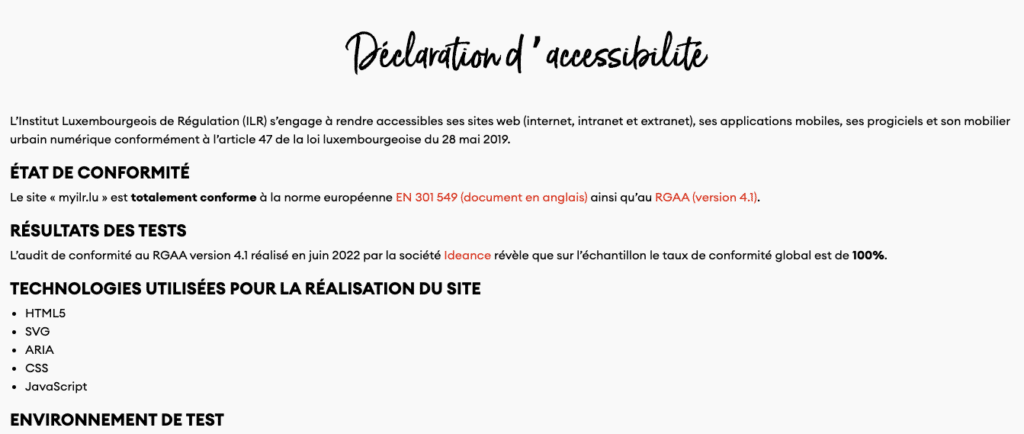
These organisations only carry out audits. They cannot work on the website itself: it is up to the client, or the agency the client works with, to implement accessibility on the site.
We can mention the company Ideance, which specialises in audits. It is also with this company that we completed our training.
We have taken part in several digital accessibility projects over the past few years.
Some examples of our work
INFPC / LIFELONG LEARNING
We designed the website of INFPC, as well as that of Lifelong learning.
The layout of elements and the interface itself play a major role in the digital accessibility of a website.
See the websites infpc.lu and lifelong-Learning.lu
MYILR
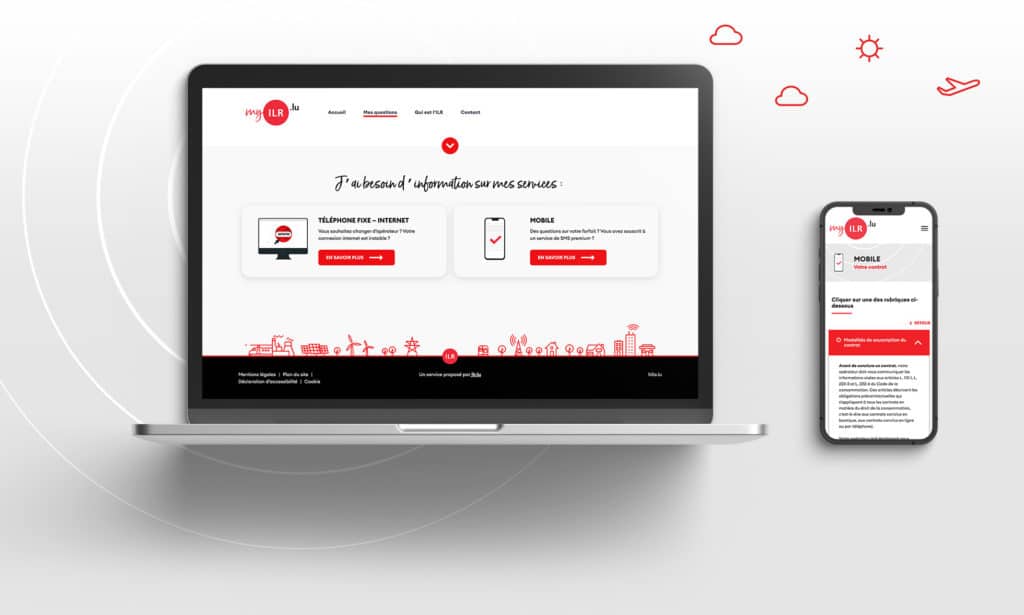
For this ILR project, we worked with the company Ideance, in charge of the site’s accessibility audit, from the very start of the project.
From the design stage of the mock-up, we adapted our work to meet accessibility graphic standards.
Then, throughout the development of the site, we adapted our developments so that the website could reach the highest possible accessibility score. Goal achieved: the site is 100% accessible.
See the website myilr.lu
WESHAREENERGY
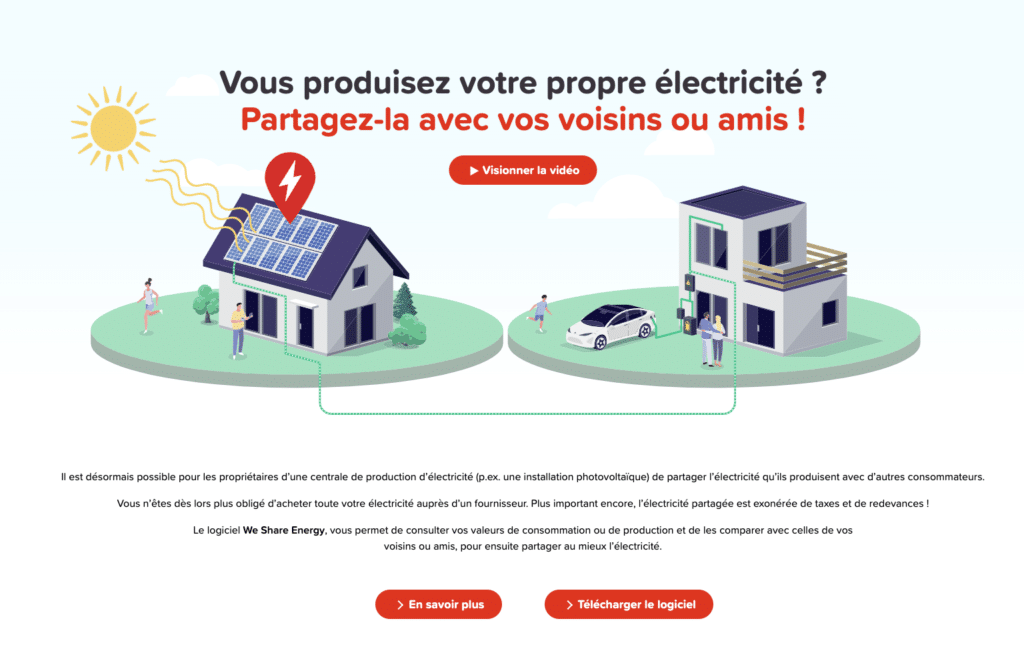
For this site, we followed the same working process as for myilr. We worked with the Ideance experts from the start and applied all accessibility best practices across the site. We achieved a final score of 95.5%.
See the site weshareenergy.lu
KLIMA AGENCE – KLIMA PAKT FIR BETRIEBER
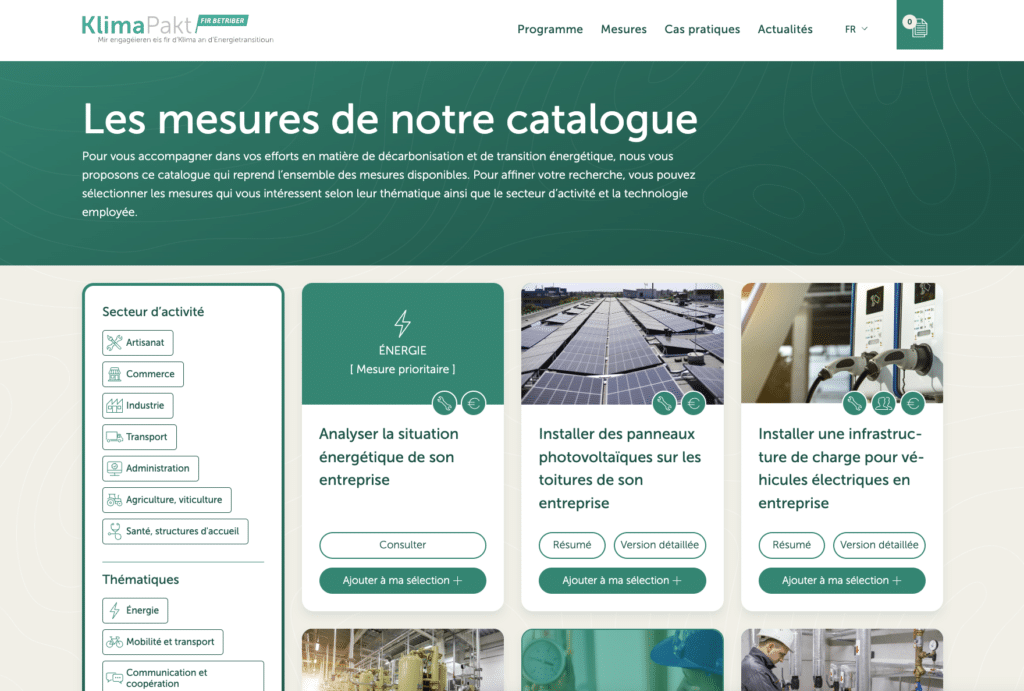
When designing this site, we also worked with the audit organisation from the very start of the project so that it would meet graphic and technical accessibility requirements.
We achieved an average compliance rate of 81.9% on this website.
See the website klimapaktfirbetriber.lu
ENERGIEAUER
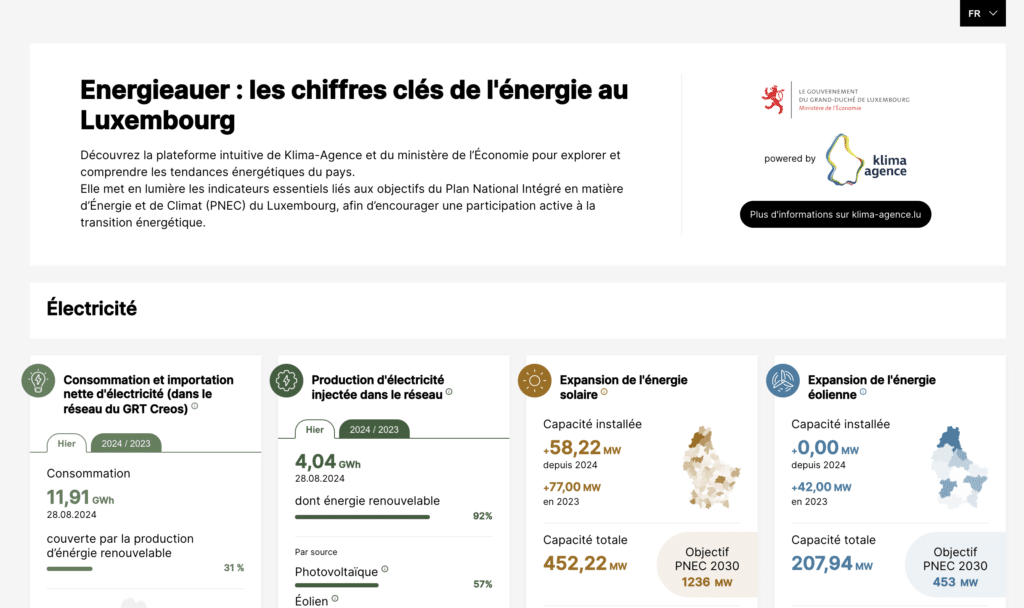
For this new website, built for Klima Agence, we applied the same method as for the KlimaPakt fir Betriber project, which allowed us to reach a compliance rate of 100%.
See the website energieauer.lu
THE h2a SITE
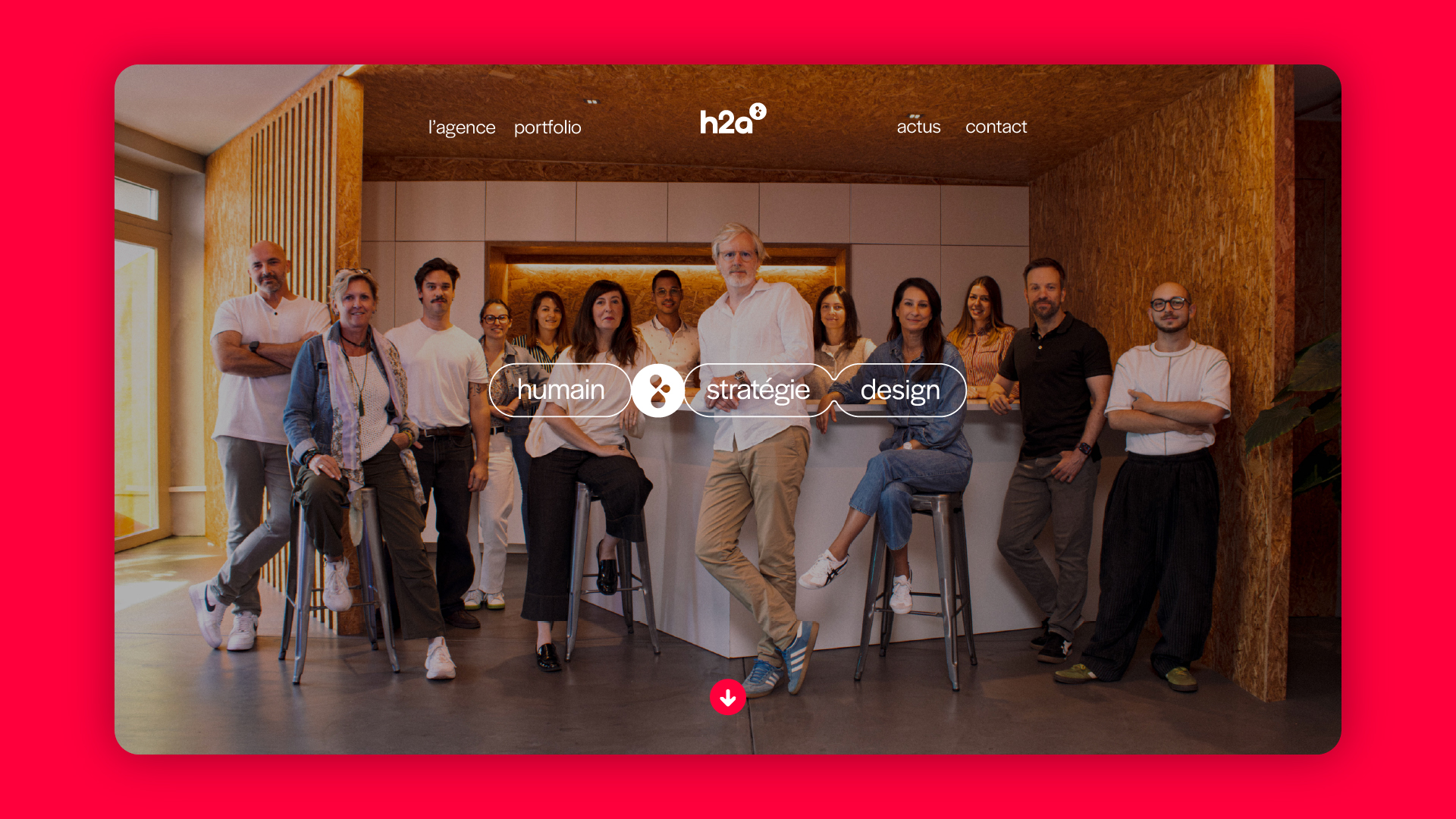
We apply best practices on our own site, and our team was trained by Ideance.
h2a is here for you
Don’t hesitate to contact us to find out more about digital accessibility or to get support with your projects.
In the meantime, here are a few useful notes:
Some notes for the web
- Ensure sufficient contrast between colours
- Provide a way to control animated content
- Provide an audio description for video content
- Use explicit wording for all buttons on the site
Some notes for publications
- The sufficient contrast rule also applies here
- Avoid empty paragraphs
- Identify decorative, informative and image-link images so that the appropriate treatment can be applied
- Follow the recommended layout for tables
- Specify the document title
In general, for all content, keep in mind that it may not only be read but also listened to or viewed under different conditions (fewer colours, no colours, no animations, etc.).